

2025-12-03 Pageview:127
Wax emulsion is widely recognized as one of the most effective additives for improving surface properties in modern paper coating applications. Whether used in packaging papers, art papers, specialty papers, or industrial grades, wax emulsion significantly enhances smoothness, rub resistance, and overall coating performance. The reason it performs so well lies in its particle size, film-forming behavior, and ability to reduce surface friction. When introduced into paper coating formulations, wax emulsion disperses evenly and creates a uniform wax layer that modifies the coated surface without affecting ink receptivity. This is especially important for paper manufacturers looking to improve print quality while maintaining production efficiency.
Smoothness is one of the most critical characteristics of coated papers, and wax emulsion contributes by filling micro-voids in the coating layer and forming a flexible, low-friction surface. This enhances the tactile feel, improves printing uniformity, and reduces coating defects such as streaks and mottling. Because wax emulsions are available in different melting points and particle sizes, they can be selected according to machine speed, coating composition, and desired finish. The improved smoothness is especially valuable for high-end applications such as magazine paper, label stock, specialty packaging, and premium coated boards. The reduction in surface roughness also enhances gloss development, which helps printers achieve sharper images and consistent color reproduction.

Rub resistance, another essential property, is dramatically improved by the protective layer formed by wax emulsion. During transportation, stacking, cutting, and printing, paper surfaces are frequently exposed to frictional forces that can cause surface damage and ink smearing. Wax emulsion reduces the coefficient of friction and strengthens the coating layer, making the paper more resistant to scuffing and scratching. This protective effect is crucial for printed packaging, high-speed offset printing, and digital printing applications where surface durability is a key quality indicator. Wax emulsion enhances both dry and wet rub resistance, ensuring that printed graphics remain intact even under high mechanical stress. It helps prevent color loss, abrasion marks, and coating dusting, thus prolonging the shelf-life and appearance of the final product.
In addition to smoothness and rub resistance, wax emulsion also contributes to anti-blocking performance. Coated papers that tend to stick together during stacking or rewinding can suffer from production delays and quality issues. Wax emulsion creates a non-tacky surface, reducing blocking problems and improving machine runnability. This helps paper mills maintain stable production at higher speeds, lowering downtime and improving overall efficiency. Another key advantage is that wax emulsion does not negatively affect ink adhesion. Instead, it helps balance slip and printability, which is essential for achieving both durability and ink acceptance. Paper manufacturers can use wax emulsions in various formulations, including styrene-acrylic, PVA, and latex-based systems. Their broad compatibility makes formulation adjustments easier and more flexible.
From a manufacturing standpoint, wax emulsion also improves the mechanical strength of the coating layer. Its film-forming properties help bind pigments and coating ingredients more uniformly, reducing coating cracks and dusting issues during converting or printing. Because the emulsion distributes evenly, it supports better coating laydown and contributes to more consistent performance across the entire web. Many paper mills use wax emulsions to enhance water resistance or moisture barrier effects, especially in food packaging, coated cups, and industrial wrapping papers. Although wax emulsion alone does not create a complete barrier, it significantly improves the surface’s hydrophobic characteristics and durability under humid conditions.
In specialty paper applications, wax emulsions provide additional benefits such as anti-slip performance, improved surface feel, and resistance to repeated handling. Products such as labels, release liners, and decorative papers rely heavily on the surface enhancement provided by wax emulsions. The ability to tailor the melting point and particle distribution allows manufacturers to create customized performance levels depending on downstream requirements. From an environmental standpoint, water-based wax emulsions offer a sustainable alternative to solvent-based additives. Their low VOC profile aligns with global environmental requirements, especially for food packaging and eco-friendly coated products. Paper mills increasingly choose water-based systems to reduce emissions, improve worker safety, and comply with regulatory standards.
For paper manufacturers seeking to improve coating quality, print durability, and product appearance, wax emulsion provides a reliable and cost-effective solution. Its combination of smoothness improvement, rub resistance enhancement, anti-blocking performance, and coating stabilization makes it indispensable across various paper grades. Whether you are producing premium packaging boards, coated printing papers, label papers, or specialty products, the right wax emulsion can significantly improve finished product value and customer satisfaction.
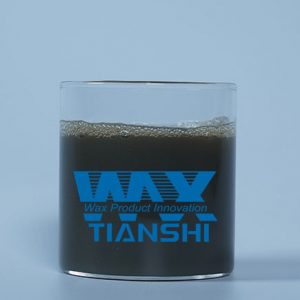
If you are looking for a high-performance wax emulsion to upgrade your paper coating formulations, TIANSWAX offers stable, high-solids PE wax emulsions and specialized coating-grade wax dispersions. We can provide samples, technical guidance, and customized solutions based on your coating system and performance requirements. Contact us today to discuss your needs and obtain product recommendations tailored to your application.
 Leave a message

We’ll get back to you soon