


We’ll get back to you soon


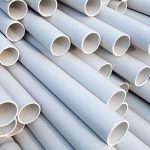 PVC lubricants are also divided into low-temperature lubrication, medium-temperature lubrication and high-temperature lubrication. Low-temperature lubrication works in the early stage of processing, such as paraffin, stearic acid, monoglyceride, butyl stearate, stearyl alcohol, etc. Medium-temperature lubrication plays a lubricating role in the middle stage of processing, such as PE wax, OPE wax, lead stearate, cadmium stearate, etc. High-temperature lubrication plays a lubricating role in the later stage of processing, such as calcium stearate, barium stearate, etc.
The use of lubricants in PVC formula design should follow the following principles:
1. The less external lubrication, the better, provided that the product does not adhere to the metal surface and the product does not have discoloration paste.
2. Internal lubrication, on the premise of ensuring that it does not affect fluidity and plasticization, should also be used less.
3. For internal lubrication, try to use high, medium and low temperature lubricants in coordination, and the same applies to external lubricants.
4. For products that require good fluidity, such as profiles and pipe fittings, the amount of internal lubrication should be slightly more than that of external lubrication. For products that do not require high plasticization, such as pipes, the amount of external lubrication is dominant.
5. As the amount of filler increases, the amount of lubricant should be increased accordingly. The oil absorption value of light calcium is high and the oil absorption value of heavy calcium is low. Attention should be paid when using it.
6. For foamed products, try to reduce the amount and use of lubricants such as paraffin that affect foaming. Reduce the density or increase the calcium content, and increase the amount of lubrication appropriately.
7. For unbalanced lubrication, the principle of adjusting one lubricant to another should be fixed to facilitate rapid identification of the cause and normal production.
The main function of TIANSHI PE wax as a lubricant is to improve the friction between the polymer melt and the hot metal surface of the processing equipment. It has poor compatibility with polymers and easily migrates out of the melt, so it can form a lubricating thin layer at the interface between the plastic melt and the metal. Tianshi PE wax has low viscosity, high softening point, good hardness, non-toxicity, good thermal stability, low high temperature volatility and other properties. As a lubricant, its chemical properties are stable and its electrical properties are good.
 Leave a message
We’ll get back to you soon