


We’ll get back to you soon


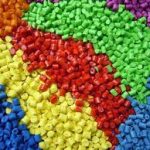 Beyond processing efficiency, PP wax also enhances surface quality and gloss control. Due to its higher crystallinity and surface hardness, it improves scratch and rub resistance in finished parts, especially in PP containers, household products, appliance components, and automotive trims. In fiber and raffia, PP wax contributes to smoother fiber surfaces and reduced filament breaks, supporting stable spinning and weaving performance.
Typical advantages include:
Strong pigment wetting and dispersibility
Enhanced melt flow and extrusion stability
Reduced torque and mechanical wear in compounding
Cleaner processing with less die build-up or plate-out
Improved gloss control and surface hardness
Better fiber lubrication and fewer breakages in raffia/non-woven production
Stable performance at high temperature and shear rates
Application areas:
PE/PP masterbatch and color concentrates
Raffia / woven bag production
Blown film and cast film
Injection-molded PP components
Non-woven fabrics and fiber spinning
Pipe & profile compounding
Choosing the right PP wax grade depends on molecular weight, viscosity, and melting point. Higher-melt PP wax offers cleaner high-temperature performance for fiber and film lines, while medium-melt grades are well-suited for masterbatch production where flow and pigment wetting are critical.
Ready to Upgrade Your Masterbatch or PP Processing?
If you need high-quality PP wax with consistent melting point, narrow molecular weight distribution, and excellent pigment dispersion performance, we supply customized solutions for masterbatch, raffia, films, injection molding, and fiber applications.
Contact us to get samples, technical data sheets, and tailored recommendations based on your resin system and extrusion process.
 Leave a message
We’ll get back to you soon