


We’ll get back to you soon


Textile finishing is a critical stage in fabric production, determining not only the final appearance but also functional properties such as smoothness, durability, and handling performance. As textile manufacturers face increasing demands for higher quality and more sustainable processes, wax emulsions have become an important additive in modern finishing formulations.
During textile finishing, fabrics are exposed to mechanical stress from padding, drying, and subsequent handling. Without adequate surface modification, fibers may exhibit excessive friction, leading to poor hand feel, increased wear, and processing difficulties. Wax emulsions address these challenges by forming a thin lubricating layer on fiber surfaces, reducing friction and improving fabric smoothness.
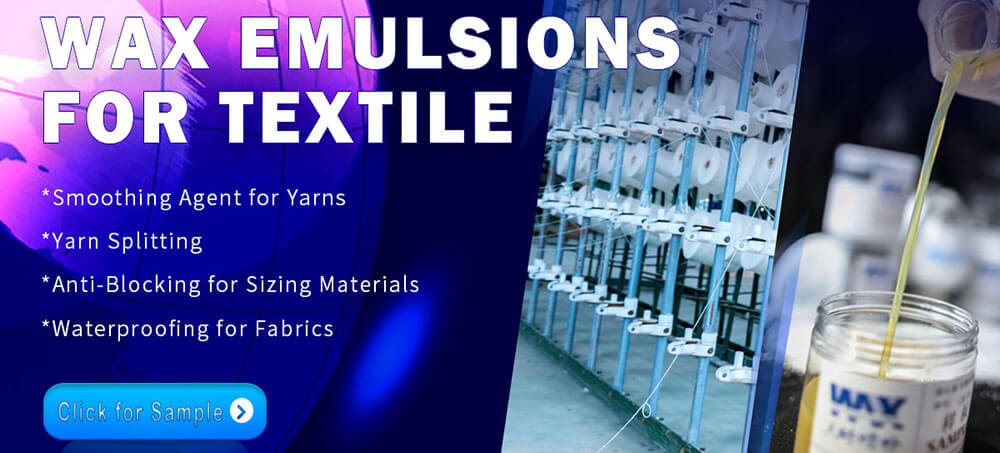
Polyethylene wax emulsions are commonly used in textile finishing due to their stability and compatibility with aqueous systems. They can be applied to a wide range of fabrics, including cotton, polyester, blends, and technical textiles. Once applied, the wax helps fibers slide more easily against each other, resulting in improved softness and reduced abrasion.
Wear resistance is particularly important for textiles used in upholstery, workwear, and industrial applications. Repeated friction during use can cause fiber damage and surface fuzzing. Wax emulsions enhance resistance to wear by reducing direct fiber-to-fiber contact and minimizing mechanical stress on the fabric surface.
Another key advantage of wax emulsions is process stability. They are easy to incorporate into finishing baths and compatible with other textile auxiliaries. This allows for consistent application and reduces the risk of defects such as uneven finish or fabric stiffening. For textile manufacturers operating continuous finishing lines, such stability is essential for maintaining productivity.
Wax emulsions can also help improve downstream processing, such as cutting, sewing, and handling. Fabrics with improved surface lubricity are easier to process, reducing equipment wear and minimizing production interruptions.
From a commercial standpoint, textile finishers increasingly seek additives that deliver consistent performance while supporting sustainable production goals. Water-based wax emulsions align well with these requirements, offering functional benefits without introducing high VOC levels.
If you are looking for wax emulsion solutions for textile finishing to improve smoothness, wear resistance, and process stability, we can support you with suitable polyethylene wax emulsions and technical guidance. Contact us to discuss your fabric types and finishing processes.
 Leave a message
We’ll get back to you soon