


We’ll get back to you soon


 I. Sewing Thread Lubrication Needs and Industry Development Status
1.1 The Decisive Impact of Lubrication on Sewing Thread Performance
During the high-speed piercing of fabric, sewing threads generate intense friction with the needle and fabric fibers. Studies show that for every 10% reduction in the coefficient of friction of sewing threads, the breakage rate can decrease by approximately 8%-12%, and sewing efficiency can increase by approximately 5%-8%. Therefore, lubrication is an indispensable process in sewing thread production.
II. Limitations of Traditional Silicone Oil Lubrication Solutions: Overheating, Thread Breakage, and Oil Seepage Problems
2.1 High-Temperature Accumulation Leading to Thread Breakage
When the temperature exceeds the tolerance limit of silicone oil, the silicone oil lubricating film undergoes thermal decomposition and carbonization, losing its lubricating function. The sewing thread is directly exposed to a high-temperature friction environment, causing the fibers to soften rapidly, its strength to decrease, and ultimately, it to break.
2.2 Oil Leakage Problems Hinder Finished Product Quality
Another major drawback of silicone oil is its oil leakage tendency. Silicone oil is a low surface tension liquid, with a surface tension of only about 20 mN/m, making it extremely easy to penetrate the gaps between fabric fibers. During sewing, excess silicone oil on the sewing thread will transfer to the fabric surface, forming oil stains, especially noticeable on light-colored and lightweight fabrics.
Oil leakage directly leads to the following consequences: First, the fabric requires additional cleaning or finishing processes to remove oil stains, increasing production costs by about 5%-10%; second, in severe cases, it can lead to fabric downgrading or even scrapping, with a loss rate of 2%-5%; third, it negatively impacts the quality reputation of downstream brands.
III. Synergistic Lubrication Mechanism of Polyethylene Wax Powder and Silicone Oil
3.1 Thermal Absorption and Dissipation Principle of Wax Powder
The melting point of polyethylene wax micropowder PEW-0281 is 145°C, a temperature that falls precisely in the "middle zone" of frictional heat from sewing threads. During high-speed sewing, when the surface temperature of the sewing thread gradually rises to the range of 100-145°C, the wax powder particles begin to absorb heat and undergo a phase change (transitioning from a solid to a molten state). This phase change process absorbs a large amount of heat (the enthalpy of melting of polyethylene wax is approximately 150-230 J/g), thus effectively buffering the rate of temperature rise on the sewing thread surface and delaying the thermal decomposition of the silicone oil lubricating film.
In other words, the wax powder acts as a miniature "heat buffer," absorbing frictional heat through its own phase change, thus providing the silicone oil lubricating film with a longer effective working time.
 3.2 Wax-Silicone Synergistic Enhancement of Slippery Properties
The core advantage of silicone oil lies in its low coefficient of friction (dynamic coefficient of friction approximately 0.1-0.2), but it is prone to decomposition at high temperatures. Polyethylene wax itself also possesses excellent slip properties (dynamic coefficient of friction approximately 0.15-0.25) and higher thermal stability. When combined, the wax powder is evenly dispersed in the silicone oil to form a suspension system. After being coated onto the sewing thread surface, the silicone oil provides immediate lubrication, while the wax powder particles provide a long-lasting solid lubricating layer.
As the silicone oil gradually decomposes at high temperatures, the wax powder particles retain their lubricating function, achieving a "relay" lubrication protection. This synergistic mechanism widens the effective lubrication temperature window from 200-250°C when silicone oil is used alone to over 300°C, significantly improving the reliability of high-speed sewing.
3.3 Mechanism of Wax Powder Reducing Oil Leakage
The core mechanism by which PEW-0281 wax powder reduces the risk of oil leakage lies in the fact that after the wax powder particles are adsorbed onto the sewing thread surface, they "lock" in some silicone oil molecules, reducing the free flow of the silicone oil. In the silicone wax coating, the wax powder forms a micron-sized solid barrier layer, preventing excessive penetration of silicone oil into the gaps between fabric fibers. Simultaneously, the anti-sticking properties of the wax powder itself help reduce adhesion and friction between the sewing thread and the fabric, further reducing the probability of the lubricant being squeezed and penetrated to the fabric surface.
IV. PEW-0281 Product Technical Analysis
4.1 Core Product Parameters
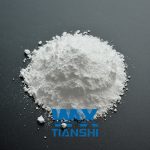
PEW-0281 is a polyethylene wax powder product developed by Nanjing Tianshi New Material Technology Co., Ltd. for precision applications. Its core technical parameters are as follows: Appearance: White powder; D50: 4μm; Melting point: 145℃; Recommended addition amount: 0.5%-3%
The global sewing thread lubrication industry is undergoing a technological upgrade from "pure silicone oil" to "silicone oil + wax powder compound". Driving factors for this trend include: the higher heat load challenges brought about by the widespread adoption of high-speed sewing equipment, the increasing demands of end-brand brands for sewing quality, and the tightening of environmental regulations on the use of chemicals.
PEW-0281 polyethylene wax micro powder, with its fine particle size of 4μm, suitable melting point of 145°C, and low addition amount of 0.5%-3%, forms a highly efficient synergistic lubrication system with silicone oil: the wax powder absorbs frictional heat, reduces needle temperature, and reduces the breakage rate by more than 20%; the wax powder locks in the silicone oil and reduces free flow; the two work together to improve sewing efficiency.
 Leave a message
We’ll get back to you soon