


We’ll get back to you soon


 Stress concentration at stacked contacts. Glass products often require multiple layers during transport, placing considerable pressure on the interlayer contact surfaces. When the coating surface lacks an effective lubricating protective layer, localized stress concentration areas preferentially undergo plastic deformation, forming visible scratches.
Ambient temperature and humidity fluctuations. Changes in temperature and humidity during transportation can cause slight softening or adhesion of the coating surface (i.e., anti-adhesion failure), further increasing the risk of scratches.
Mechanism of Wax Powder Enhancing the Scratch Resistance of Waterborne Glass Paint
Adding abrasion-resistant wax powder to waterborne glass paint formulations is currently recognized in the industry as a highly effective scratch-resistant solution. Its mechanism of action mainly includes three aspects:
Surface Enrichment and Migration Mechanism
During the drying and curing process of the coating, due to density differences and surface energy, polyethylene wax micropowder gradually migrates and accumulates on the coating surface, forming a dense nanoscale waxy protective film on the outermost layer of the coating. This "sacrificial layer" preferentially withstands external friction, effectively protecting the underlying coating from damage. This surface enrichment effect is the core mechanism of the wax powder's scratch-resistant function.
Reduced Coefficient of Friction
According to BYK test data, adding wax additives to waterborne coatings can reduce the surface friction coefficient of the coating from 0.30 to 0.06 (based on TQC-sheen scratch tester tests). The significant reduction in the coefficient of friction means a significant decrease in sliding resistance between coating layers, making the coating surface less prone to scratches under transportation vibration conditions. Simultaneously, the improved smoothness also enhances the tactile experience for end users. Enhanced Hardness and Abrasion Resistance
Wax micropowder itself possesses high hardness, and when dispersed in the coating, it acts as a "microfiller" reinforcement. Taber abrasion test data shows that wax additives can increase the abrasion cycle count of the coating by 60%, while simultaneously improving scratch resistance from 100g to 900g (TQC-sheen scratch tester data). This means the coating can withstand greater external forces without visible scratches, providing particularly significant protection for glass coatings during transport and stacking.
PEW-0251 Product Technical Analysis
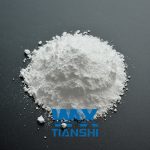
PEW-0251 is a polyethylene wax micropowder product independently developed by Nanjing Tianshi New Material Technology Co., Ltd., specifically designed to improve the surface performance of coatings. The following are the core technical parameters of this product: Appearance: White micropowder; Particle size D50: 6μm; Melting point: 115℃; Addition amount: 0.5-3% (based on total coating volume)
The core technological advantages of PEW-0251 are reflected in the following aspects: Fine particle size and concentrated distribution. With a D50 particle size of 6μm, the particle size range is relatively concentrated, and the molecular weight is uniform. The fine and uniform D50 particle size ensures good dispersion stability of the wax powder in aqueous systems, reducing the likelihood of agglomeration or sedimentation, while also ensuring that the surface gloss of the coating is not significantly affected.
High hardness and excellent particle shape. PEW-0251 has high hardness and a regular particle shape, which provides more effective scratch and abrasion resistance after coating curing, superior to the protective effect of irregularly shaped wax powders.
Easy dispersibility. PEW-0251 has a uniform molecular weight and good particle morphology, making it easy to disperse in aqueous systems. It can be added to coating formulations through various processes, reducing production complexity.
Multi-functional integration. In addition to its core abrasion and scratch resistance functions, PEW-0251 also provides multiple surface effects such as slip resistance, anti-blocking, and stain resistance, making it a cost-effective multi-functional additive.
Dosage and Dispersion Method
Recommended Dosage
The recommended dosage of PEW-0251 is 0.5-3% (based on the total amount of paint). The specific dosage should be adjusted based on the following factors:
Base System Hardness: For acrylic systems with lower hardness, the dosage can be increased to 2-3%; for polyurethane modified systems (pencil hardness of 3H or higher), the dosage can be controlled at 0.5-1.5%.
Transportation Distance and Stacking Method: For long-distance transportation and multi-layer stacking, the upper limit of the dosage is recommended.
Gloss Requirements: For high-gloss topcoats, a lower dosage should be used to avoid affecting the surface optical effect.
Dispersion Process
PEW-0251 offers three dispersion methods to suit different production conditions:
Method 1: Direct dispersion with high-speed stirring. Suitable for small-batch production or laboratory formulation testing. PEW-0251 is directly added to the paint and dispersed evenly using a high-speed stirring device. This method is simple to operate, but sufficient stirring speed and time must be ensured.
Method 2: Pre-dispersed wax paste method. A 20-30% concentration wax paste is prepared in advance and then added proportionally during the paint mixing stage. This method is suitable for mass production, ensuring a more uniform and stable dispersion of the wax powder in the system, and is the recommended mainstream usage method.
Method 3: Grinding and Dispersion Method. Added using a grinder and high-shear dispersion equipment. This method achieves the best dispersion effect, but special attention must be paid to controlling the grinding temperature to avoid excessive temperature causing the wax powder to melt and clump (PEW-0251 melting point is 115℃).
Application Scenarios
PEW-0251 has a wide range of applications, covering various coating and ink systems:
Water-based Glass Coatings. This is the core application scenario for PEW-0251. In water-based acrylic systems (market share 68.4%) and polyurethane modified systems (market share 16.7%), PEW-0251 effectively improves the scratch resistance and abrasion resistance of the coating, solving the problem of scratches on glass products during transportation. Suitable for coating scenarios such as various glass containers, decorative glass, appliance glass panels, and glass furniture.
Wood Coatings. Water-based wood coatings require high surface smoothness and scratch resistance. PEW-0251 significantly improves the feel and durability of the coating film, reducing scratches during daily use.
Industrial Coatings: Suitable for various metal and plastic substrates, this water-based industrial coating provides abrasion resistance, anti-blocking, and stain resistance.
Ink Applications: Suitable for various printing processes including reverse printing, surface printing, screen printing, letterpress, and gravure printing, enhancing the abrasion resistance and smoothness of printed surfaces.
PEW-0251 can also be used in water-based systems, exhibiting good compatibility and dispersion stability in water-based glass coatings.
Recommended Additive Schemes for Different Water-Based Glass Coating Systems
Acrylic Water-Based Glass Coating Systems
Acrylic water-based glass coatings hold a market share of 68.4%, making them the most widely used base system. Recommendations:
PEW-0251 addition: 1.5-3%
Dispersion method: Pre-dispersed wax paste method is recommended (prepare 20-30% wax paste) to ensure uniform dispersion.
Expected results: Significantly reduced coefficient of friction, greatly improved scratch resistance, meeting the requirements of long-distance transportation.
Polyurethane modified waterborne glass paint system
The polyurethane modified system can achieve a pencil hardness of 3H or higher, with a Taber abrasion value as low as 0.015g/100r, exhibiting good basic properties. Recommendations:
PEW-0251 Dosage: 0.5-1.5%
Dispersion Method: Direct dispersion with high-speed stirring. The system itself has high hardness; the wax powder provides auxiliary surface protection.
Expected Results: Further improves smoothness and scratch resistance on top of existing high hardness, while maintaining a pleasant surface feel.
High-Gloss Decorative Glass Coating System
For decorative glass coatings with strict gloss requirements:
PEW-0251 Dosage: 0.5-1.0%
Dispersion Method: Pre-dispersed wax paste method; strictly control the dosage to avoid affecting optical effects.
Expected Results: Provides effective scratch resistance and anti-blocking protection while maintaining high gloss.
Precautions for Use
Grinding Temperature Control: When using a grinding and dispersion process, the grinding temperature must be strictly controlled to avoid exceeding the melting point of PEW-0251 (115°C). Preventing wax powder from melting and agglomerating, thus affecting dispersion:
Addition Order:It is recommended to add PEW-0251 during the paint mixing stage of coating production. Avoid adding it too early during the grinding stage, which could cause unnecessary shear heat generation.
Dispersion Uniformity: Ensure the wax powder is fully and uniformly dispersed in the system to avoid localized high concentrations that could affect the coating surface effect.
System Compatibility: PEW-0251 can be used in water-based systems, but when applying it to a new formulation for the first time, it is recommended to conduct a small-scale test to verify compatibility.
Storage Conditions: The product is non-hazardous, packaged in a paper-plastic composite bag, net weight 20 kg/bag, shelf life 2 years. Store in a cool, dry place.
PEW-0251, with its fine 6μm particle size, high hardness, easy dispersibility, and multi-functional integration of slip, scratch resistance, abrasion resistance, anti-blocking, and stain resistance, has become an indispensable abrasion-resistant additive in water-based glass baking paint formulations.
Nanjing Tianshi New Material Technology Co., Ltd. has been deeply involved in the wax powder field for many years, providing high-performance wax powder solutions for the coatings and inks industry through strict product quality control and continuous technological innovation.
 Leave a message
We’ll get back to you soon