


We’ll get back to you soon


Water-based gravure inks are widely used in flexible packaging, food packaging, paper printing, and decorative printing applications. Compared with solvent-based systems, water-based inks offer significant environmental advantages and lower VOC emissions. However, formulators often face challenges such as poor abrasion resistance, surface scratching, blocking, and sticking during printing, rewinding, and transportation. Selecting the right additive system is essential for improving ink durability and processing performance.
One of the most effective ways to enhance the performance of water-based gravure inks is the use of wax emulsions. These additives provide multiple benefits, including improved wear resistance, anti-blocking properties, and better slip performance.
Abrasion resistance is a critical requirement for packaging inks. During printing, converting, transportation, and end-use handling, printed surfaces are exposed to continuous friction. Wax emulsions form a protective layer on the ink surface, helping to reduce mechanical damage and preserve print quality.
[caption id="attachment_454" align="aligncenter" width="300"]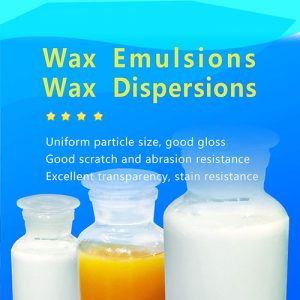 wax dispertions[/caption]
Scratch resistance can also be significantly improved. The wax particles migrate to the ink film surface during drying, creating a lubricating effect that minimizes visible scratches and scuff marks.
Blocking is another common issue in gravure printing. Printed films are often wound into rolls immediately after printing. Under pressure and elevated temperatures, adjacent printed surfaces may stick together, leading to defects and production losses. Wax emulsions help reduce surface adhesion and improve anti-blocking performance.
Slip enhancement is equally important for high-speed packaging operations. By lowering the coefficient of friction (COF), wax additives allow printed films to move smoothly through converting and packaging equipment while reducing surface wear.
For flexible packaging applications, improved rub resistance helps maintain the appearance of graphics, logos, and product information throughout the supply chain. This is particularly important for food packaging, consumer goods packaging, and industrial packaging materials.
Several types of wax emulsions can be used in water-based gravure inks, including polyethylene wax emulsions, oxidized polyethylene wax emulsions, polypropylene wax emulsions, and specialty synthetic wax emulsions. The choice depends on the desired balance of slip, abrasion resistance, gloss, and anti-blocking performance.
A properly selected wax emulsion can provide surface protection without significantly affecting print density, color strength, or transparency. This allows formulators to improve durability while maintaining excellent print quality.
The optimal dosage depends on ink formulation, substrate type, printing speed, and performance requirements. Laboratory testing and production trials are typically used to determine the most effective addition level.
As demand for environmentally friendly packaging continues to grow, water-based gravure inks require increasingly sophisticated additive technologies. Wax emulsions remain one of the most effective solutions for improving wear resistance, preventing sticking, and enhancing overall print durability.
At Tianshi Wax, we offer a complete range of wax emulsions for water-based gravure inks, flexographic inks, and packaging applications. Contact our technical team today to learn how our products can help improve the performance of your printing ink formulations. Leave a message
We’ll get back to you soon