


We’ll get back to you soon


Nylon (PA) is one of the most widely used engineering plastics due to its excellent mechanical strength, toughness, chemical resistance, and processability. It is commonly used in gears, bearings, bushings, rollers, guide rails, automotive components, and industrial machinery parts. However, when subjected to continuous friction and mechanical movement, standard nylon materials may experience wear, frictional heat buildup, and reduced service life. Therefore, improving the wear resistance of nylon is a key objective for many manufacturers.
One of the most effective methods is the incorporation of PTFE micropowder. PTFE (polytetrafluoroethylene) has an extremely low coefficient of friction and outstanding self-lubricating properties. When dispersed in nylon compounds, PTFE particles help form a transfer film during operation, reducing friction between moving surfaces and significantly improving wear resistance.
[caption id="attachment_455" align="aligncenter" width="300"]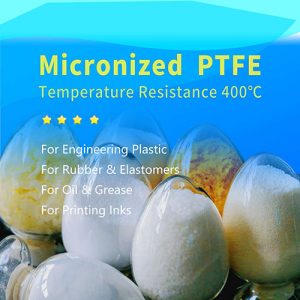 ptfe micropowder[/caption]
PTFE-modified nylon is widely used in gears, bearings, sliders, and mechanical components that require long-term wear protection. Compared with unmodified nylon, PTFE-filled grades typically exhibit lower wear rates and smoother operation.
Another approach is the use of lubricating wax additives. Specialty waxes can improve internal lubrication during processing while also contributing to reduced friction in the final product. These additives are often used in engineering plastic compounds to enhance processability and wear performance.
Glass fiber reinforcement can also improve the mechanical strength and dimensional stability of nylon components. In certain applications, glass fiber-reinforced nylon offers better load-bearing capacity, which indirectly contributes to improved wear resistance under mechanical stress.
For demanding applications, manufacturers may combine PTFE micropowder with glass fiber or mineral fillers to achieve a balance of strength, rigidity, and tribological performance. Such formulations are commonly used in automotive and industrial engineering applications.
The selection of the appropriate nylon grade is equally important. Nylon 6, Nylon 66, and specialty nylon materials each offer different performance characteristics. Optimizing the base resin can improve wear behavior before additional modification is considered.
Processing conditions also affect wear performance. Proper compounding, dispersion, and molding parameters help ensure that wear-resistant additives are distributed uniformly throughout the material, maximizing their effectiveness.
In applications such as gears, bearings, bushings, conveyor components, and sliding parts, reducing the coefficient of friction is often just as important as improving wear resistance. Lower friction generates less heat, reduces energy consumption, and extends component lifespan.
Among all wear-resistant modification technologies, PTFE micropowder remains one of the most effective and widely adopted solutions. Typical addition levels range from 1% to 15%, depending on application requirements and performance targets.
As engineering plastics continue to replace metal components in many industries, improving the wear resistance of nylon materials has become increasingly important. Through the use of PTFE micropowder, lubricating additives, reinforcing fillers, and optimized processing conditions, manufacturers can significantly enhance product durability and long-term performance.
At Tianshi Wax, we supply high-quality PTFE micropowders and specialty wax additives for nylon compounds, engineering plastics, and wear-resistant applications. Contact our technical team today to learn more about our material modification solutions. Leave a message
We’ll get back to you soon