


We’ll get back to you soon


Thermal paper is widely used in receipts, labels, tickets, logistics labels, medical records, and retail applications. Unlike conventional printing paper, thermal paper generates images through heat-sensitive coatings rather than ink. Because the thermal layer is relatively delicate, protecting the paper surface while maintaining printing performance is a key challenge for manufacturers. Wax emulsions have become an important additive in thermal paper coating formulations due to their ability to enhance surface properties and improve overall product performance.
A wax emulsion is a stable water-based dispersion of fine wax particles that can be incorporated into paper coating systems. When applied to thermal paper, the wax forms a protective surface layer that helps improve durability without negatively affecting thermal printing sensitivity.
One of the primary functions of wax emulsions in thermal paper coatings is improving abrasion resistance. Thermal paper receipts and labels are frequently subjected to handling, transportation, and storage. Continuous friction can damage the thermal coating and reduce image quality. Wax emulsions help protect the surface from wear, allowing printed information to remain clear and readable for longer periods.
[caption id="attachment_454" align="aligncenter" width="300"]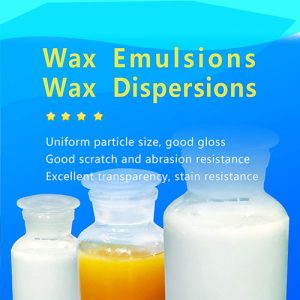 wax dispertions[/caption]
Smoothness is another important benefit. Thermal printing heads require a uniform paper surface to ensure consistent image development. Wax emulsions can improve coating smoothness, reducing friction between the print head and paper surface. This contributes to stable printing performance and may help extend print head life.
Anti-sticking performance is particularly valuable in thermal paper production and processing. Rolls of thermal paper are often wound tightly and stored under varying temperature conditions. Without adequate surface protection, adjacent layers may stick together. Wax emulsions reduce surface tackiness and improve roll handling performance during manufacturing and end use.
Wax emulsions can also improve scratch resistance. Printed receipts and labels often encounter mechanical contact during transportation and handling. The protective wax layer helps reduce visible scratches and protects the thermal image from damage.
In label applications, thermal paper is commonly exposed to varying environmental conditions. Wax emulsions help enhance surface protection and improve the durability of printed information, making them useful in logistics, warehousing, and retail environments.
Another advantage is improved slip performance. By lowering the coefficient of friction, wax emulsions allow thermal paper to move more smoothly through printing equipment, packaging machinery, and dispensing systems.
Polyethylene wax emulsions, oxidized polyethylene wax emulsions, and specialty synthetic wax emulsions are commonly used in thermal paper coating formulations. The choice depends on the required balance between print sensitivity, surface durability, and processing performance.
Because thermal paper coatings are highly specialized, additive selection must be carefully controlled. Properly formulated wax emulsions provide surface protection without interfering with image formation or thermal response characteristics.
As the demand for durable and high-performance thermal paper products continues to grow, wax emulsions remain an effective solution for improving abrasion resistance, smoothness, anti-sticking performance, and print protection.
At Tianshi Wax, we offer high-performance wax emulsions for thermal paper coatings, paper surface treatments, and specialty paper applications. Contact our technical team today to learn more about our wax emulsion solutions for the paper industry. Leave a message
We’ll get back to you soon