


We’ll get back to you soon


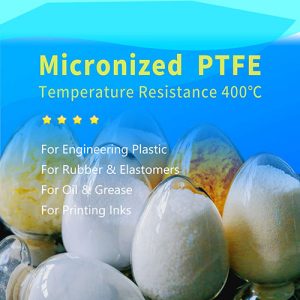 ptfe micropowder[/caption]
PTFE wax is known for its extremely low coefficient of friction and excellent abrasion resistance. When properly dispersed in a water-based ink system, the micronized particles migrate to the surface during drying, forming a thin lubricating layer.
This lubricating layer significantly reduces friction and improves surface durability.
One of the main advantages of PTFE wax in water-based inks is improved abrasion resistance. Printed surfaces are more resistant to abrasion during handling, transportation, and packaging.
Scratch and abrasion resistance are also enhanced, helping to maintain the quality of printed patterns over a long period. Slippery properties are another key advantage. Lower surface friction improves processing efficiency in steps such as printing, rewinding, and filling.
Anti-blocking properties are particularly important in flexible packaging applications, as printed films need to be wound into rolls. PTFE wax helps prevent surfaces from sticking together under pressure or high temperatures.
Choosing the right PTFE wax for water-based inks requires careful consideration of dispersion stability and compatibility.
Water-based systems are more sensitive to particle agglomeration; therefore, particle size and surface treatment are critical factors.
Fine, micron-sized PTFE particles typically provide a smoother surface and better transparency while still offering strong surface protection.
Compatibility with acrylic, polyurethane, and water-based resin systems is crucial for formulation stability.
Dosage optimization is essential for balancing slipperiness and abrasion resistance, gloss, and printability.
Processing conditions such as drying rate and substrate type also affect PTFE wax migration and final ink performance.
In many advanced water-based ink systems, polytetrafluoroethylene (PTFE) wax is used in combination with polyethylene (PE) wax or amide wax to achieve balanced, multifunctional performance.
As the printing industry continues its transition to environmentally friendly technologies, PTFE wax remains one of the most valuable additives in high-performance water-based inks.
If you are formulating water-based inks and require improved abrasion resistance and anti-blocking properties, our micronized PTFE wax products offer a reliable and effective solution. Please contact us for technical support and formulation advice.
 Leave a message
We’ll get back to you soon