


We’ll get back to you soon


Under severe dry friction conditions, unmodified POM components typically suffer from three primary wear modes:
Tooth Profile Wear & Backlash Shift: Gradual surface loss thins gear teeth, leading to increased gear backlash and position drift in precision servo mechanisms.
Stick-Slip & Noise: High static-to-dynamic friction ratios on sliding rails and cams cause jerky motion (crawling) and operational chatter.
Thermal Melting & Stripping: At high PV (Pressure-Velocity) limits, localized frictional heating exceeds POM's thermal distortion limit, triggering surface melting and catastrophic tooth stripping.
By upgrading to wear-resistant POM grades through solid lubrication, compounders can command premium market pricing—typically 20% to 25% higher than standard unfilled grades.
PTFE features extremely weak intermolecular shear strength. Since PTFE's melting point (330°C) is significantly higher than POM's processing temperature (190–205°C), the modification operates through a solid-state transfer film mechanism:
Solid-Phase Dispersion: PTFE remains solid micro-particles uniformly dispersed throughout the POM matrix during twin-screw extrusion and injection molding.
Interfacial Migration: During service, minor wear on the POM surface exposes subterranean PTFE micro-particles. Frictional stress and heat work the particles across the contact zone.
Transfer Film Deposition: PTFE spreads smoothly onto the mating surface (metal or plastic counter-face), forming a durable, low-shear transfer film. This converts the sliding interaction from "POM-to-Metal/Plastic" into an ultra-low-friction "PTFE-to-PTFE" contact.
Particle size directly impacts transfer film continuity, melt flow, and surface aesthetics:
Optimal Range: Industry studies confirm 10–15 μm as the ideal particle range for forming continuous transfer films in POM.
Advantages of D50 = 12μm (e.g., PTFE-0143): Positioned precisely in the median of the ideal range, it ensures rapid transfer film formation without clogging extrusion screen packs or leaving surface graininess on molded parts.
| Property | Value / Specification |
| Chemical Composition | Polytetrafluoroethylene (PTFE) |
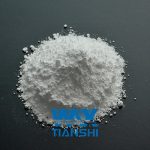
| Appearance | Fine White Powder |
| Particle Size (D50) | 12 μm |
| Melting Point | 330 °C |
| Recommended Loading | 5% — 20% (POM, PA, PC, PPS, PBT, etc.) |
| Packaging | 25 kg / Fiber Drum |
Formulation loading should be tailored to the application's tribological duty cycle:
Low-Load / Noise Reduction (5% – 8% PTFE): Ideal for low-speed home appliance gears and toy drive mechanisms. Minimal impact on tensile strength and low raw material cost增量.
Medium-Load / General Wear (10% – 12% PTFE): Recommended for office automation gears, power tool secondary gears, and standard linear guide blocks. Establishes a fully stable transfer film.
High-Load / Dry-Friction Maintenance-Free (15% – 20% PTFE): Designed for automotive actuator gears, high-RPM precision drives, and oil-free sliding components.
Q1: What is the recommended processing temperature for PTFE-modified POM?
POM Melt Temp: Keep between 190 — 205 °C. Exceeding 210 °C may degrade the POM matrix.
Mold Temp: Set to 80 — 95 °C to ensure full crystallinity and smooth surface finish.
Q2: Will adding PTFE micropowder affect the flexural strength of POM gears?
Yes, high PTFE content slightly lowers tensile and flexural strength. We recommend verifying gear-root bending fatigue or adding 10–15% glass fiber for structural reinforcement.
Q3: How can I request samples of PTFE-0143 for compounding trials?
Contact our technical sales team via the form below to request TDS sheets, MSDS, and free sample quantities for laboratory extrusion tests.
Looking to lower friction coefficients and extend the service life of your POM wear components?
???? Email: info@waxpi.com
 Leave a message
We’ll get back to you soon