


We’ll get back to you soon


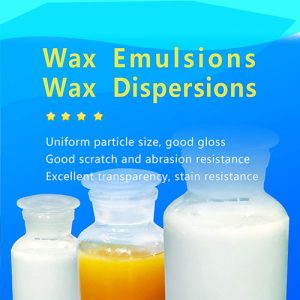 wax dispertions[/caption]
Textile Finishing and Leather Processing
The textile industry accounts for 9.8% of the demand for waterproofing wax emulsions, which are primarily used for waterproofing, softening, and lubrication treatments. According to application guidelines from Hywax GmbH, the use of wax emulsions in the textile industry encompasses four main areas: waterproofing textile substrates; improving the frictional properties of fibers and yarns; enhancing the performance of finishing agents such as softeners and silicone resins; and imparting superior fabric properties, including improved flex abrasion resistance, tear strength, and sewability. Selection Guidelines:
Waterproofing: Oxidized polyethylene wax emulsion or paraffin wax emulsion is recommended (dosage: 2–5% of fabric weight); contact angles can exceed 120°.
Softening: A blend of non-ionic wax emulsion and silicone softener (dosage: 1–3%) provides a soft, smooth hand feel.
Sewing Lubrication: Cationic wax emulsion (dosage: 0.5–1.5%) reduces thread breakage rates during sewing by over 30%.
Leather Finishing: Carnauba wax emulsion or oxidized polyethylene wax emulsion (dosage: 2–4%) enhances the waxy feel, gloss, and water resistance.
Packaging and Paper Industries
The packaging industry accounts for 18.2% of the demand for waterproofing wax applications, primarily for moisture-proofing, oil-proofing, and enhancing surface gloss. According to application guidelines from PeakUniversalBusiness, paraffin wax emulsions are used in the paper and packaging sectors for moisture and anti-blocking treatments, improving printability and gloss, and enhancing oil resistance in food packaging.
Selection Guidelines:
Food Packaging Paper: Food-grade paraffin wax emulsion is recommended (coating weight: 3–8 g/m²); compliant with FDA 21 CFR and EU 10/2011 standards for food-contact materials.
Moisture-proof Packaging: Paraffin wax emulsion coating (5–10 g/m²) can reduce the paper's Cobb value by more than 70%.
Oil-proof Packaging: Fluorocarbon wax emulsion or carnauba wax emulsion provides excellent oil resistance, achieving Kit test ratings of 8–12.
Corrugated Board: Oxidized polyethylene wax emulsion (dosage: 0.5–2% of starch adhesive) improves the board's moisture resistance and stacking strength.
 Leave a message
We’ll get back to you soon