


We’ll get back to you soon


Water-based formulations are widely adopted in coatings, inks, adhesives, and textile finishes due to increasingly strict environmental regulations and sustainability requirements. However, compared with solvent-based systems, water-based formulations often present challenges related to surface performance. Higher surface friction, insufficient slip, and uneven surface smoothness are common issues that can negatively affect application efficiency, processing stability, and the final appearance of the coated or treated surface.
Wax emulsions are specifically designed to address these surface-related challenges in water-based systems. By dispersing finely emulsified wax particles into the formulation, wax emulsions modify surface characteristics during film formation and curing. As the water evaporates, wax particles migrate toward the surface and form a microscopic lubricating layer. This layer reduces the coefficient of friction, allowing the surface to slide more easily against contacting materials and improving the overall smoothness and tactile feel.
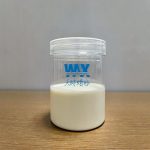
The improvement in slip provided by wax emulsions is particularly important in water-based coatings and inks where surface drag can lead to blocking, scratching, or poor printability. In packaging and industrial coatings, enhanced slip reduces stacking damage and improves handling efficiency. In water-based inks, better slip performance helps prevent smearing, reduces plate wear, and supports higher printing speeds. The controlled migration behavior of wax emulsions ensures that slip is achieved without negatively affecting film integrity or adhesion.
Surface smoothness is another critical performance aspect influenced by wax emulsions. Uneven film formation, micro-roughness, and surface defects can occur in water-based systems due to rapid water evaporation or incompatibility between formulation components. Wax emulsions help level the surface by reducing surface tension differences and improving flow during drying. The result is a more uniform surface appearance with reduced drag marks, improved gloss consistency, and a smoother touch.
Different types of wax emulsions offer varying performance depending on the wax chemistry and particle size. Polyethylene wax emulsions are widely used for their excellent abrasion resistance and balanced slip properties. Paraffin wax emulsions provide effective slip improvement at lower cost and are often used in applications where high abrasion resistance is not the primary requirement. Synthetic and modified wax emulsions offer enhanced compatibility with specific resin systems and improved stability in demanding formulations.
Selecting the appropriate wax emulsion requires consideration of the end-use application, resin system, and processing conditions. Particle size distribution plays a key role in determining the balance between slip, surface smoothness, and transparency. Finer particles are typically preferred in clear or high-gloss systems, while larger particles may be used in industrial or opaque coatings where maximum slip and wear resistance are required. Proper dosage is also essential, as excessive wax content may affect recoatability or adhesion.
In water-based formulations, wax emulsions provide a practical and efficient way to enhance slip and surface smoothness while maintaining environmental compliance. Their ability to improve surface performance without introducing solvents or negatively impacting film properties makes them a valuable additive across multiple industries. As demand for high-performance, eco-friendly formulations continues to grow, wax emulsions will remain a key component in optimizing the surface characteristics of water-based systems.
For formulators seeking to improve slip behavior and achieve smoother, more durable surfaces in water-based applications, carefully selected wax emulsions offer a proven and versatile solution. If you are developing or optimizing water-based coatings, inks, or functional finishes, choosing the right wax emulsion can significantly enhance both processing performance and final product quality.
 Leave a message
We’ll get back to you soon