


We’ll get back to you soon


 I. Technical Challenges and Wax Additive Dilemmas in Waterborne High-Gloss Coatings
1.1 Core Performance Requirements of High-Gloss Systems
Waterborne high-gloss coatings are widely used in furniture paints, wood paints, plastic paints, metal decorative paints, and clear topcoats. Compared to traditional solvent-based highlighting systems, water-based highlighting systems offer significant advantages in terms of environmental friendliness—VOC emissions can be reduced by 70-90%. However, this also places higher demands on formulation technology.
The core technical indicators of the high-gloss system include:
Gloss: ≥85° at a 60° angle, some high-end applications require ≥90°.
Lightness: Haze of the coating film must be controlled below 5%.
Surface Smoothness: Surface roughness (Ra) of the coating film must be below 0.1μm.
Scratch Resistance: Must pass a fingernail scratch test (fingernail hardness approximately 2.5-3H), leaving no visible bright marks.
Anti-blocking Properties: No sticking to the board after 24 hours of stacking under 50°C/95%RH conditions.
II. OE-6303 Modified Polyethylene Wax Emulsion: Technical Principles and Product Analysis
2.1 Product Positioning and Technical Roadmap
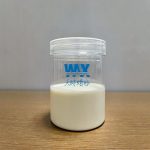
OE-6303 is a non-ionic modified polyethylene wax emulsion independently developed by Nanjing Tianshi New Material Technology Co., Ltd., specifically designed for the anti-blocking, scratch-resistant, and abrasion-resistant requirements of water-based high-gloss systems. Its core technology route achieves stable water dispersion of polyethylene wax through a nonionic surfactant system, while precisely controlling the emulsification process to keep the wax particle size within the nanoscale range. This fundamentally solves the problems of "hazing, reduced gloss, and gloss streaks" in traditional wax emulsions in high-gloss systems.
Nanjing Tianshi New Material Technology Co., Ltd. has been deeply involved in the polyethylene wax field for many years, possessing a complete technology chain from polyethylene wax synthesis to wax emulsion emulsification and end-application verification. This allows the development of OE-6303 to be based on precise control of the raw material molecular structure and emulsification process.
2.2 Advantages of the Nonionic System
OE-6303 adopts a nonionic modified system, a choice based on profound technical considerations:
Compatibility with Resin Systems: Waterborne acrylic emulsions and waterborne polyurethane dispersions commonly used in waterborne coatings are usually nonionic or weakly anionic stable. Nonionic wax emulsions have better charge compatibility with these systems, preventing demulsification or flocculation due to charge neutralization.
pH Stability: OE-6303 has a pH range of 5-8, covering the pH range of most waterborne coating systems. The non-ionic nature of the system is unaffected by pH fluctuations, providing a wider operating window during formulation adjustments.
III. Performance of OE-6303 in Various Application Scenarios
3.1 Waterborne Acrylic High-Gloss Wood Coatings
Waterborne acrylic high-gloss wood coatings are the most typical application scenario for OE-6303. In this system, OE-6303 performs the following core functions:
Anti-sticking: Wooden furniture often sticks together during stacking and transportation. The lubricating layer formed by OE-6303 on the coating surface effectively reduces surface energy, preventing adhesion between coating layers.
Scratch resistance: In daily use, surfaces such as tabletops and cabinet doors are easily scratched by hard objects. OE-6303 provides dual protection through surface hardening and lubrication, significantly improving the scratch resistance of the coating.
Abrasion resistance: Abrasion problems in high-frequency use areas are effectively alleviated by the long-lasting lubrication protection of OE-6303.
Gloss retention: Most importantly, all the above performance improvements are achieved without sacrificing high gloss and transparency.
3.2 Waterborne Polyurethane High-Gloss System
Waterborne polyurethane dispersions (PUDs) are renowned for their excellent mechanical properties and chemical resistance, and are widely used in high-end furniture, automotive interiors, and industrial coatings.
3.3 Overprint Varnish and Topcoat
OE-6303 performs equally well in both overprint varnish and topcoat applications. According to product technical data, OE-6303 can increase the scratch resistance, gloss, lubricity, and release properties of topcoats. In water-based ink systems, OE-6303 also prevents ink clumping, enhances gloss, and provides excellent lubricity and scratch resistance.
IV. Waterborne High-Gloss Coating Formulation Design Guidelines
4.1 OE-6303 Addition Methods
OE-6303 is easy and flexible to use. The following addition methods are recommended:
Direct Addition: In the final stage of coating production (paint mixing stage), add OE-6303 directly to the prepared waterborne high-gloss coating at a dosage of 3-5%, and stir at low speed until homogeneous.
Post-Addition: Add during the paint mixing stage after grinding and dispersion is complete. This avoids excessive damage to the stability of the wax emulsion during high-shear dispersion.
Dosage Adjustment: It is recommended to start with 3% for trial mixing and gradually increase to 5% according to actual performance requirements. Excessive addition may lead to decreased recoatability of the coating film. 4.2 Formulation Compatibility Considerations
pH Matching: OE-6303 has a pH range of 5-8 and should be kept within the same pH range as the coating system to avoid demulsification due to acid-base differences.
Temperature Control: Production and storage temperatures should be controlled between 0-35°C, and below 50°C in extreme cases, to avoid wax emulsion coagulation due to high temperatures or freeze-thaw damage due to low temperatures.
Compatibility with Other Additives: OE-6303 can be used in combination with commonly used additives such as leveling agents, defoamers, and thickeners, but it is recommended to conduct small-scale compatibility testing first.
Nanjing Tianshi New Material Technology Co., Ltd. is a leading professional supplier of wax additives in China, with over 20 years of experience in the field of polyethylene wax and wax emulsions. It has accumulated rich experience in wax emulsion modification technology, especially in nonionic modification, nano-level emulsification processes, and functional wax emulsion design. The successful development of OE-6303 is a significant manifestation of Nanjing Tianshi's technological accumulation in the field of high-gloss wax emulsions.
 Leave a message
We’ll get back to you soon