

2025-11-12 Pageview:175
In water-based adhesive systems, formulators often face challenges like blocking, poor slip, or tack inconsistency after drying. These issues not only reduce production efficiency but also affect the appearance and usability of the final laminated or bonded products. To address these challenges, wax emulsions have become a key ingredient in modern water-based adhesive formulations, providing functional balance between tack, slip, and film performance.
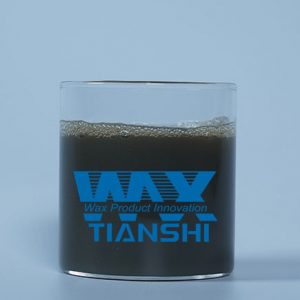
A wax emulsion is a fine dispersion of wax particles—commonly polyethylene (PE), carnauba, or Fischer-Tropsch wax—in water, stabilized by surfactants. When incorporated into adhesive formulations, these wax particles migrate toward the film surface during drying, forming a thin lubricating layer that reduces blocking and enhances slip. This surface modification ensures easy separation between coated films, paper sheets, or laminates after drying, even under high humidity or stacking pressure.
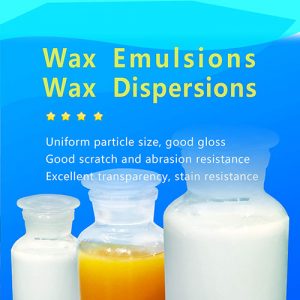
wax dispertions
In many adhesive applications—such as labels, packaging films, laminating glues, and paper coatings—blocking can lead to operational difficulties and product defects. Wax emulsions effectively minimize this by creating a micro-barrier that prevents film surfaces from sticking together. At the same time, they enhance the tactile feel and clean release of the adhesive layer, ensuring smooth production and consistent product performance.
Another crucial function of wax emulsions is controlling surface energy. The presence of wax particles decreases surface friction, which improves processability on high-speed lines. For example, in paper laminating and flexible packaging, wax-modified adhesives allow better film winding and unwinding, helping manufacturers maintain smooth and continuous operations without surface sticking or build-up.
Moreover, wax emulsions enhance abrasion resistance and water repellency of the adhesive film. This is particularly important for water-based systems, which often struggle with moisture sensitivity compared to solvent-based counterparts. The hydrophobic nature of the wax layer provides improved protection against water vapor, while maintaining adhesion strength between substrates.
From a formulation perspective, wax emulsions are easy to incorporate—usually added during the final mixing stage. They are compatible with common acrylic, polyurethane, and EVA-based dispersions, and can be adjusted in dosage to achieve the desired balance of slip, gloss, and adhesion. Their fine particle size ensures uniform distribution throughout the film, preventing haze or surface defects.
With the rising demand for eco-friendly adhesives, water-based systems have become the mainstream. Wax emulsions contribute to this sustainability trend by offering low-VOC performance, easy handling, and stability in both acidic and alkaline environments. Their multifunctional benefits make them an essential additive in the shift from solvent-based to water-based adhesive technology.
At TIANSHI WAX, we provide a wide range of PE, carnauba, and oxidized wax emulsions specifically designed for adhesive applications. Our products help formulators achieve better anti-blocking performance, smoother surfaces, and improved long-term stability.
If you’re seeking to improve your water-based adhesive performance and reduce production issues caused by blocking or surface friction, contact TIANSHI WAX today. Our technical team can recommend the most suitable wax emulsion for your system and production process.
 Leave a message

We’ll get back to you soon