

2025-09-09 Pageview:146
PVC foam board is widely used in advertising displays, furniture, building materials, and decorative panels due to its lightweight, fire resistance, weather durability, and cost-effectiveness. However, the processing of PVC foam boards presents challenges such as poor melt flow, uneven foaming, surface defects, and plate sticking.
To overcome these issues, manufacturers rely on lubricants—particularly wax-based internal and external lubricants—to ensure smooth processing, stable foaming, and high-quality surface finish. This article provides a detailed guide on how to choose the right lubricants for PVC foam board production.

wax additive
Melt Flow and Processing Stability
Without proper lubrication, the PVC melt may stick inside the extruder or cause unstable extrusion.
Foaming Quality
Uneven foaming leads to low-density variation and weak mechanical properties.
Surface Defects
Sticking, roughness, and poor gloss are common problems during processing.
Equipment Efficiency
High friction and unstable processing increase energy consumption and shorten die life.
Lubricants play a dual role in PVC processing:
Internal Lubricants
Reduce melt viscosity and improve polymer chain mobility.
Enhance fusion and ensure uniform foaming.
External Lubricants
Minimize friction between the melt and metal surfaces of the extruder.
Prevent sticking, improve plate release, and protect processing equipment.
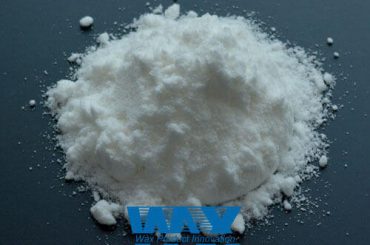
Function: Provides excellent external lubrication, prevents sticking and improves smooth surface finish.
Application: Widely used in extrusion of PVC foam boards requiring high surface gloss.
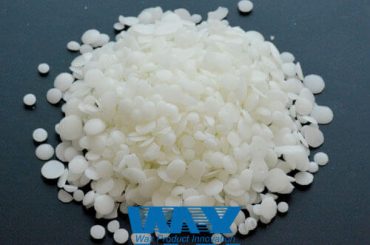
Function: Offers short-term lubrication, reduces initial processing friction.
Limitation: May volatilize at high processing temperatures, not suitable for long cycles.
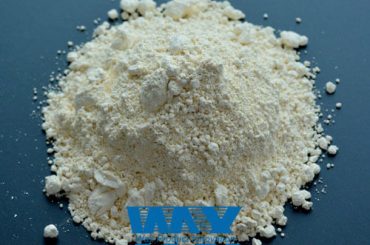
Function: Delivers balanced internal and external lubrication, stable under high-temperature processing.
Application: Ideal for thick foam boards and continuous extrusion production.
Function: Provide fine dispersion and customized lubrication balance.
Application: Tailored solutions for customers seeking both processing stability and surface performance.
A furniture-grade PVC foam board producer faced problems of plate sticking and uneven foaming. By switching from paraffin wax to a PE/FT wax blend:
Processing stability improved by 30% with smoother extrusion.
Foaming uniformity enhanced, reducing density variation.
Surface gloss and release performance improved, eliminating plate sticking issues.
This demonstrates how the right lubricant selection directly impacts product quality and production efficiency.
Board Type and Thickness
Thicker boards require stronger internal lubrication (FT wax).
Thin decorative panels benefit from external lubrication (PE wax).
Processing Temperature and Equipment
High-temperature extrusion requires thermally stable lubricants.
Continuous production benefits from long-lasting lubricants.
Desired Surface Properties
High gloss → PE wax
Balanced gloss and foam control → PE/FT wax blends
Cost-Performance Balance
Paraffin wax provides low-cost solutions but limited performance.
Blended waxes offer optimized performance at competitive cost.
Improved Processing Efficiency: Stable melt flow, reduced energy consumption.
Enhanced Foaming Quality: Uniform foam structure, stronger mechanical properties.
Superior Surface Appearance: Smooth, glossy, and defect-free finish.
Equipment Protection: Reduced wear and extended lifespan of extruders and dies.
Choosing the right lubricant for PVC foam board production is critical to achieving processing stability, uniform foaming, and high-quality surfaces. Wax-based lubricants—such as PE wax, FT wax, or customized blends—offer manufacturers an effective way to optimize production efficiency and product performance.
Are you facing challenges with PVC foam board extrusion or surface quality defects? Our specialized wax-based lubricant solutions are designed to improve processing stability and enhance board performance. Contact our technical experts today for tailored recommendations and sample support.
 Leave a message

We’ll get back to you soon