

2025-10-30 Pageview:255
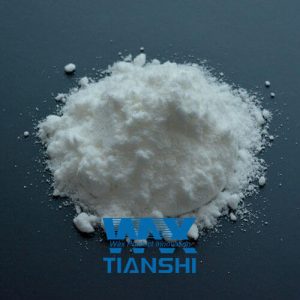
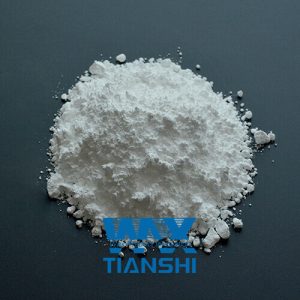
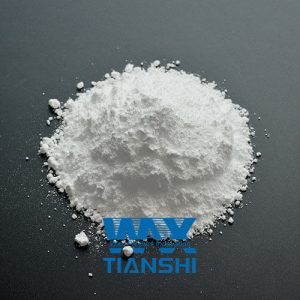
Powder metallurgy (PM) is a critical manufacturing route for automotive gears, bushings, bearings, and high-precision metal components used in motors, appliances, and industrial machinery. As demand increases for lightweight systems, high dimensional accuracy, and cleaner production processes, the role of lubrication in powder compaction becomes increasingly vital. Wax-based lubricants enable uniform powder flow, reduce friction between metal particles and die walls, protect molds, and improve green density before sintering. However, not all lubricants perform equally. Traditional stearate-type lubricants can leave residues, interfere with sintering, and limit achievable density.
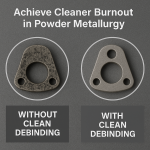
To meet modern performance requirements, manufacturers are adopting low-residue polyethylene-based wax lubricants engineered specifically for high-strength PM applications. These lubricants decompose cleanly during thermal processing, minimizing carbon or ash residue while supporting high-density compaction and structural stability. The ability to achieve higher green density is particularly valuable for structural and functional components with tight dimensional tolerances, as it reduces pore formation, improves mechanical strength, and allows components to be used with minimal machining.
A key advantage of high-performance wax lubricants lies in their smooth pressure transmission capabilities. During pressing, they form a uniform lubricating layer that reduces friction between powder particles and the die surface, lowering ejection force and reducing the risk of micro-cracks and edge failures. This also extends mold service life, lowers energy consumption, and enables stable production of thin-walls and complex-geometry parts—critical in the automotive and robotics sectors. Compared with conventional lubricants, advanced wax systems provide improved thermal decomposition, making them suitable for applications requiring stringent impurity control.
These lubricants are especially valuable in iron-copper alloys, stainless steel PM parts, soft magnetic components, and precision mechanical assemblies. As electrification accelerates the demand for e-motor components and sensor systems, the need for high-density and high-dimensional accuracy PM technology increases. Wax-based lubricants allow producers to enhance performance without major changes to equipment or sintering protocols.
Production flexibility also improves. Lower ejection force reduces mold wear, allowing high-speed pressing and extended tool life. Clean burn-off behavior reduces sintering defects such as swelling, blistering, or surface discoloration. Manufacturers benefit from fewer rejects and more consistent part performance, while end-users gain components with improved mechanical integrity and stability under operational loads.
As the PM industry continues evolving toward cleaner processing, energy efficiency, and lightweight structural design, lubricants engineered for low residue, high green strength, and consistent sintering behavior will become essential.
If you are producing structural PM parts, magnetic components, or high-precision mechanical parts, our powdered metallurgy wax lubricants can support cleaner burn-off, higher density, and longer mold life. Contact us for samples, technical data sheets, and application support to optimize your compaction and sintering performance.
 Leave a message

We’ll get back to you soon