

2025-11-20 Pageview:115
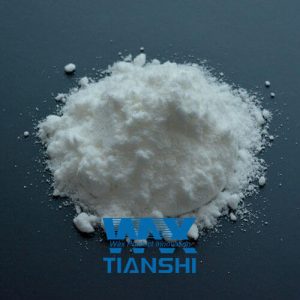
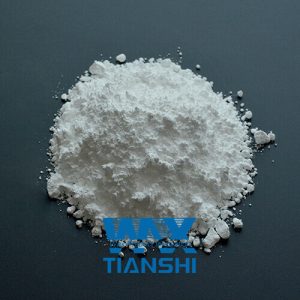
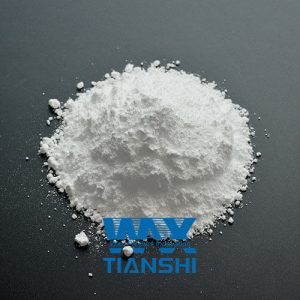
PP wax has become an essential processing aid in the plastics and masterbatch industry because of its unique combination of lubrication, thermal stability and dispersion-enhancing properties. As manufacturers face increasing requirements for higher output, lower production costs and better product quality, PP wax offers practical and measurable performance benefits that directly influence processing efficiency. Its ability to improve melt flow behavior, reduce screw torque and enhance pigment dispersion makes it one of the most widely used and cost-effective additives in masterbatch and plastic compounding.
One of the primary advantages of PP wax is its naturally low viscosity. During extrusion, high viscosity melt can increase mechanical resistance, limit throughput and lead to unstable material flow. When PP wax is incorporated, its low-viscosity nature reduces internal friction within the polymer matrix and helps the material move more smoothly through the screw and die. This directly lowers energy consumption, stabilizes pressure and makes it possible to run machines at higher speeds without compromising product quality. For large-volume producers of films, pipes, sheets and injection molded parts, these efficiency gains translate into substantial cost savings.
Another key function of PP wax is its ability to enhance pigment and filler dispersion. In color masterbatch production, uniform dispersion is critical for achieving consistent color strength and stable performance. PP wax works as an internal and external lubricant, reducing agglomeration and improving wetting of pigment particles. This leads to better dispersion efficiency, fewer defects and improved color uniformity in the final product. It also reduces plate-out on equipment surfaces, minimizing downtime for cleaning and extending production continuity.
Its excellent thermal stability makes PP wax particularly valuable in high-temperature processes such as compounding, injection molding and film blowing. Many additives tend to degrade or volatilize when exposed to elevated temperatures for extended periods. PP wax maintains stable performance, resists oxidation and prevents formulation breakdown. This ensures that the final product maintains its desired mechanical and visual properties even in demanding industrial environments.
Compatibility is another advantage that supports PP wax’s use across different resin systems. It blends well with PP, PE and other polyolefins, allowing formulators to use it in diverse applications ranging from films and injection molded parts to engineering plastics and filled compounds. Because of this compatibility, PP wax helps improve the mechanical properties and process stability of the overall formulation rather than creating negative interactions.
Ultimately, PP wax improves processing efficiency through a combination of enhanced flow, better dispersion, reduced torque, lower energy consumption and improved formulation stability. These benefits make it an important additive for manufacturers seeking consistent quality, reduced operational costs and higher productivity across various plastic applications.
 Leave a message

We’ll get back to you soon