

2025-12-08 Pageview:163
Water-based coatings continue to gain market share as industries shift toward low-VOC, environmentally friendly technologies. While waterborne systems reduce solvent usage and improve safety, they often face performance limitations such as lower water resistance, weaker scratch resistance, slower film formation, and reduced surface smoothness. Wax emulsion has become one of the most effective functional additives to overcome these challenges and elevate water-based coating performance to levels comparable with or superior to solvent-based formulations. Its fine particle size, stable dispersion, and compatibility with acrylics, polyurethanes, alkyd emulsions, and hybrid systems make it indispensable in modern coating development.
Wax emulsion provides multiple performance enhancements simultaneously because wax particles can migrate toward the coating surface during drying, forming a thin protective layer that modifies friction, hardness, appearance, and water repellency. This mechanism allows wax emulsions to improve both surface and internal film properties. One of the most valuable contributions is improved scratch and abrasion resistance. Water-based coatings typically have softer film formation compared with solvent-based systems, making them more prone to surface damage. By incorporating wax emulsion, the coating develops a tougher and smoother top layer that resists mechanical marks during stacking, handling, or daily use. For wood coatings, industrial finishes, and plastic coatings, this benefit is especially important.

Slip and anti-blocking properties also improve significantly. Wax particles reduce surface friction, enabling coated objects to slide smoothly without sticking or causing rub marks. This property is critical for packaging, paper coatings, leather finishes, and water-based varnishes. Without wax emulsion, waterborne systems may exhibit blocking under heat or pressure because water evaporation changes the surface energy. Wax-controlled slip prevents these issues while maintaining a pleasant touch and a controlled level of surface smoothness.
Another essential role of wax emulsion is water resistance enhancement. Although water-based coatings form continuous films, residual hydrophilicity often leads to lower water repellency, especially in acrylic-based systems. Wax emulsion introduces hydrophobic regions across the film and on the surface, reducing water absorption and improving resistance to swelling or whitening. This advantage is visible in exterior coatings, wood protection, and metal primers where standing water or moisture exposure is common.
Gloss control is another area where wax emulsion plays a crucial role. Depending on the wax type and dosage, formulators can fine-tune gloss levels from high gloss to matte. Unlike traditional matting agents that rely on light scattering, wax emulsions modify surface micro-texture more subtly, delivering smoother matte effects without compromising film strength. This is especially valuable in high-end furniture coatings, leather finishes, architectural wall paints, and auto refinishing primers.
In addition, wax emulsion enhances stain, rub, and chemical resistance. It reduces pigment burnish on matte coatings and helps maintain color integrity after repeated wiping. This is increasingly important in household paints, children’s room coatings, and commercial wall finishes where frequent cleaning is expected. Industrial coatings also benefit from improved solvent and chemical resistance when wax emulsion is used alongside polyurethane dispersions or epoxy-modified systems.
When formulating with wax emulsion, choosing the right wax type is critical. Polyethylene wax emulsions deliver high hardness and abrasion resistance; polypropylene wax emulsions provide higher heat resistance; Fischer–Tropsch wax emulsions offer stronger matting and anti-blocking performance; and carnauba wax emulsions enhance gloss retention and film hardness. Oxidized wax emulsions improve compatibility, stability, and wetting in waterborne systems. Formulators often blend different emulsions to achieve balanced performance.
Dosage typically ranges from 1% to 5% depending on the desired functions and resin system. For scratch resistance, higher-melting-point wax emulsions work best. For slip control, finer particle size emulsions provide more uniform performance. For matte effects, higher-dosage FT wax emulsions are recommended. Dispersion is straightforward because wax emulsions mix easily with water-based resins, though pH stability and shear conditions should be considered to avoid coagulation.
In a market driven by sustainability and regulatory pressure, wax emulsions have become a key enabling technology that delivers high performance without compromising environmental standards. They allow water-based coatings to match or exceed solvent-based systems in durability, smoothness, and resistance—making them indispensable in wood finishing, industrial coatings, architectural paints, leather coatings, paper coatings, textile finishes, and specialty formulations.
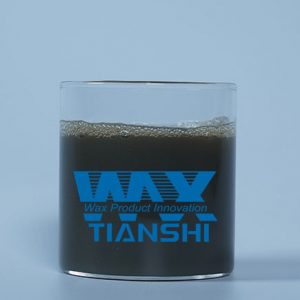
TIANSWAX supplies high-quality polyethylene, Fischer–Tropsch, carnauba, and oxidized wax emulsions tailored for water-based coatings and inks. If you need samples, TDS, or formulation guidance, contact us to find the ideal wax emulsion solution for your application.
 Leave a message

We’ll get back to you soon