

2025-12-15 Pageview:134
Die build-up and plate-out are among the most persistent processing challenges in PVC extrusion and molding. Whether producing pipes, profiles, window frames, cables, or sheets, manufacturers frequently encounter deposits on dies, calibrators, and downstream equipment. These deposits not only interrupt production but also negatively affect surface quality, dimensional stability, and overall efficiency. Wax additives play a critical role in controlling these issues by regulating melt flow, reducing friction, and stabilizing the interaction between PVC compounds and metal surfaces.
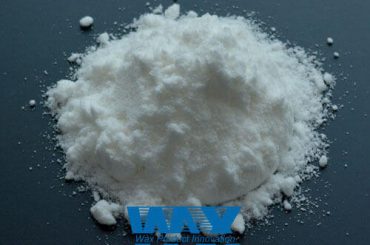
Plate-out typically occurs when low-compatibility additives migrate out of the PVC melt and condense on cooler metal surfaces. This buildup gradually restricts flow channels, causes surface streaks, and leads to frequent shutdowns for cleaning. Wax additives—particularly polyethylene (PE) wax, oxidized PE wax, and Fischer-Tropsch (FT) wax—help prevent plate-out by optimizing both internal and external lubrication within the PVC compound.
Internally, wax additives reduce friction between PVC resin particles during melting and fusion. Proper internal lubrication ensures a more uniform plasticization process, preventing localized overheating or incomplete fusion that can trigger additive separation. When the melt structure is stable and homogeneous, fewer low-molecular components are forced out of the matrix, significantly lowering the risk of plate-out formation.
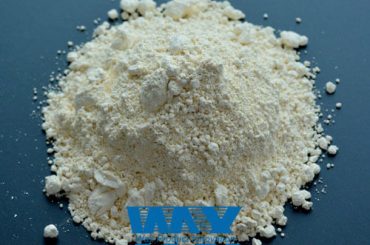
Externally, wax additives create a controlled lubricating layer between the PVC melt and metal surfaces of the barrel and die. This reduces adhesion, minimizes shear stress at the interface, and prevents molten PVC or degraded additives from sticking to equipment. Oxidized PE wax is especially effective in this role because its polar functional groups provide better compatibility with PVC while still delivering reliable release from metal surfaces.
Wax additives also help stabilize melt viscosity, which is a key factor in die cleanliness. Excessively high viscosity increases shear stress and promotes material degradation, while overly low viscosity can cause uncontrolled migration of additives. By fine-tuning melt flow, wax additives enable smooth extrusion at consistent pressure levels, reducing the likelihood of decomposition products accumulating on dies and calibrators.
Another important function of wax additives is their interaction with stabilizer systems. In modern lead-free PVC formulations, calcium-zinc stabilizers are widely used but often provide weaker lubrication than traditional lead systems. Wax additives compensate for this by improving flow and reducing friction, thereby maintaining clean die surfaces even under long production cycles. This synergy is crucial for manufacturers seeking environmentally friendly formulations without sacrificing processing stability.
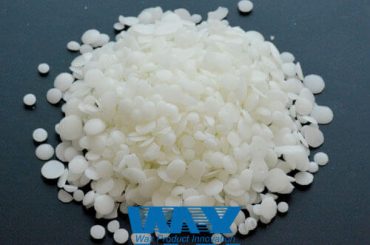
High-quality wax additives also exhibit excellent thermal stability, which directly impacts plate-out behavior. Waxes with narrow molecular weight distribution and high purity resist volatilization and degradation at processing temperatures. This reduces the formation of sticky residues that commonly contribute to die build-up. FT waxes and high-performance PE waxes are particularly valued for long, uninterrupted extrusion runs.
Beyond cleanliness, wax additives improve final product quality. Reduced die build-up leads to smoother surfaces, consistent gloss, and tighter dimensional control. For PVC profiles and pipes that must meet strict appearance and tolerance requirements, this translates into lower scrap rates and improved customer satisfaction.
Selecting the right wax additive depends on the specific PVC application, processing temperature, screw design, and stabilizer system. By optimizing wax type, melting point, and dosage, manufacturers can achieve a stable balance between lubrication, fusion, and equipment cleanliness.
If your PVC processing line is experiencing frequent die build-up or plate-out issues, wax additives offer a proven and cost-effective solution to improve both processing efficiency and product quality.
Need help optimizing wax additives for PVC processing? We supply PE wax, oxidized PE wax, and FT wax specifically engineered for PVC pipe, profile, and sheet extrusion. Contact us for formulation advice and technical support.
 Leave a message

We’ll get back to you soon