

2025-12-23 Pageview:298
Water-based coatings are increasingly adopted across industrial and decorative applications due to environmental regulations and application safety requirements. However, compared with solvent-based systems, water-based coatings are more prone to surface-related issues such as high friction, surface tack, and blocking during drying and handling. These challenges directly affect processing efficiency and final surface quality. Wax emulsions are widely used in water-based coatings to address these issues by modifying surface behavior without disrupting the coating matrix.
In water-based coating films, surface friction is closely linked to polymer mobility and drying dynamics. During film formation, residual surface tack can cause coated substrates to stick together when stacked or rolled too early. Wax emulsions introduce finely dispersed wax particles into the system, which migrate in a controlled manner toward the coating surface as water evaporates. This controlled migration forms a thin lubricating layer that reduces surface friction and minimizes direct contact between coating films.
Improved slip performance is one of the most noticeable effects of wax emulsions. By lowering the coefficient of friction, wax-modified surfaces slide more easily against each other and against external objects. This is particularly important for wood coatings, packaging coatings, and industrial finishes where handling, transport, or assembly can easily cause surface damage. Enhanced slip not only improves surface feel but also reduces the risk of scratches and scuff marks during routine processing.
Anti-blocking performance is another critical benefit of wax emulsions in water-based coatings. Blocking occurs when coated surfaces adhere to each other under pressure or elevated temperature. Wax emulsions reduce surface tack by interrupting polymer-to-polymer contact at the surface, allowing coated items to be stacked, packed, or stored more efficiently. This contributes to higher production throughput and fewer quality complaints related to surface sticking.
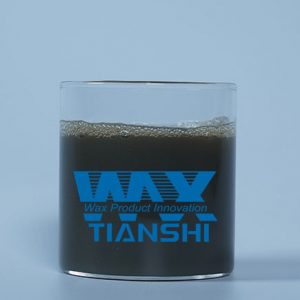
Wax emulsions are also valued for their ease of incorporation and formulation flexibility. Supplied in liquid form, they can be added during production with minimal shear and are compatible with common water-based resin systems such as acrylics and polyurethanes. When properly selected, wax emulsions improve slip and anti-blocking performance without negatively affecting transparency, gloss, or intercoat adhesion.
The effectiveness of wax emulsions depends on factors such as wax type, particle size, and dosage. Softer waxes generally provide better slip and surface smoothness, while harder waxes can contribute additional abrasion resistance. Careful evaluation under practical application conditions is essential to achieve the desired balance between surface performance and appearance.
For formulators working with water-based coatings, wax emulsions offer a reliable solution to improve slip and anti-blocking performance while maintaining stable processing behavior. If you are optimizing water-based coating formulations and need support in selecting suitable wax emulsions, our technical team can provide product recommendations and samples for evaluation. Contact us to discuss your specific requirements.
 Leave a message

We’ll get back to you soon