

2026-03-16 Pageview:78
Paper packaging has become increasingly important in the global shift toward sustainable materials. As industries look for alternatives to plastic packaging, paper-based materials are widely used in food packaging, takeaway containers, and protective packaging. However, untreated paper has limited resistance to water and moisture, which can reduce its functionality in many packaging applications.
To improve water resistance, manufacturers often apply barrier coatings to paper surfaces. Wax emulsions have emerged as one of the most effective additives for enhancing water resistance while maintaining recyclability and sustainability.
Wax emulsions consist of finely dispersed wax particles suspended in water. Because they are water-based, they can be easily incorporated into paper coating formulations without the need for organic solvents. This makes them particularly suitable for environmentally friendly packaging solutions.
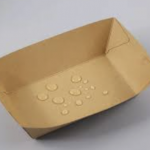
When a wax emulsion coating is applied to paper and dried, the wax particles migrate toward the surface and form a continuous hydrophobic layer. This layer acts as a barrier that reduces water penetration into the paper structure.
The hydrophobic nature of wax materials is the key to this water resistance. Wax molecules repel water, preventing it from being absorbed by the cellulose fibers that make up paper. As a result, the coated paper maintains its structural integrity even when exposed to moisture.
Wax emulsion coatings are widely used in applications such as food wrapping paper, bakery packaging, fast food packaging, and takeaway containers. In these applications, the packaging must resist moisture from food while maintaining strength and appearance.
Another advantage of wax emulsions is their compatibility with existing paper coating processes. They can be applied using common coating techniques such as blade coating, rod coating, or spray coating. This allows paper manufacturers to integrate wax emulsion coatings into their production lines without significant equipment modifications.
In addition to improving water resistance, wax emulsions can also enhance other performance properties of paper packaging. These include improved surface smoothness, better release properties, and moderate grease resistance.
Compared with traditional paraffin wax treatments or plastic laminations, wax emulsions offer improved process control and more uniform coating distribution. Because the wax particles are already dispersed in water, the coating formulation can achieve consistent barrier performance across large production volumes.
As sustainability becomes a key priority for packaging manufacturers, wax emulsion coatings are increasingly used as part of plastic-reduction strategies. Unlike polyethylene laminated paper, wax-coated paper may be easier to recycle depending on the coating structure and application.
However, achieving optimal water resistance requires proper formulation design. Factors such as wax type, particle size, and coating weight all influence the final barrier performance.
As demand for eco-friendly packaging continues to grow, wax emulsions will play an increasingly important role in improving the performance of paper-based packaging materials.
If you are developing water-resistant paper packaging solutions, our wax emulsion products provide reliable barrier performance and excellent compatibility with paper coating systems. Contact us to learn more about suitable wax emulsion options for your packaging applications.
 Leave a message

We’ll get back to you soon