

2026-06-02 Pageview:144
The coefficient of friction (COF) is a crucial performance parameter in many coating applications. It directly affects the coating’s scratch resistance, abrasion resistance, operational efficiency, anti-blocking properties, and overall durability.
For manufacturers seeking superior surface performance, Fischer-Tropsch wax is one of the most effective additives for reducing friction.
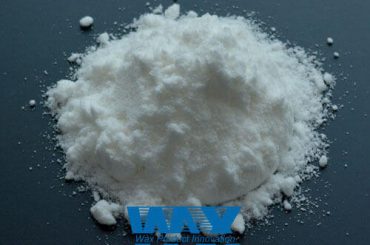
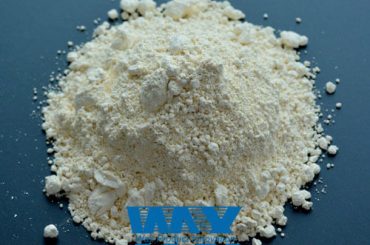
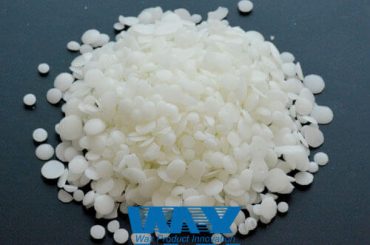
Fischer-Tropsch wax is a synthetic wax with high hardness, excellent lubricity, and a controllable molecular structure. When added to a coating, micron-sized Fischer-Tropsch wax particles migrate to the coating surface during film formation, creating a thin lubricating layer.

This surface layer reduces resistance between contact surfaces, thereby lowering the overall coefficient of friction.
Reducing the coefficient of friction offers numerous benefits. First, it improves scratch resistance by reducing the mechanical stress generated when an object moves across the coated surface.
Second, it enhances abrasion resistance by minimizing wear during repeated contact.
Third, a lower coefficient of friction improves operational and processing efficiency. Coated sheets, metal plates, plastic parts, and packaging materials move more smoothly in production equipment without causing excessive surface damage.
Fischer-Tropsch wax also helps improve anti-blocking properties. By reducing surface adhesion, the coated material is less likely to stick together during storage or transportation.
Compared to traditional paraffin wax, Fischer-Tropsch wax typically provides a more consistent coefficient of friction reduction due to its higher hardness and superior thermal stability.
The degree of coefficient of friction reduction depends on several factors, including particle size, wax concentration, coating thickness, and resin compatibility.
Finely powdered Fischer-Tropsch wax usually provides a more uniform coefficient of friction reduction while maintaining good appearance properties.
Proper dosage optimization is crucial. Excessive wax dosage may affect gloss or transparency, while insufficient dosage may fail to achieve the desired coefficient of friction reduction.
Fischer-Tropsch wax is widely used in industrial coatings, automotive coatings, wood coatings, UV coatings, coil coatings, and packaging coatings, fields with high requirements for coefficient of friction and durability.
In some high-end formulations, Fischer-Tropsch waxes are used in combination with PTFE waxes to achieve a lower coefficient of friction and higher abrasion resistance.
As coating manufacturers continue to seek higher-performance surfaces, Fischer-Tropsch waxes remain a proven solution for reducing the coefficient of friction and improving the overall durability of coatings.
If you are formulating a low-friction coating system, our micronized Fischer-Tropsch wax products offer superior slip properties, surface protection, and processing stability. Contact us for technical support and customization advice.
 Leave a message

We’ll get back to you soon