

2025-08-27 Pageview:119
Polyoxymethylene (POM, Acetal) is widely used in precision mechanical parts, gears, and automotive components due to its high stiffness, low friction, and dimensional stability. Despite these advantages, POM can face processing challenges such as mold sticking, surface scratching, and high friction during service.
Micronized wax additives can help POM formulations achieve improved lubrication, better mold release, and scratch-resistant surfaces.
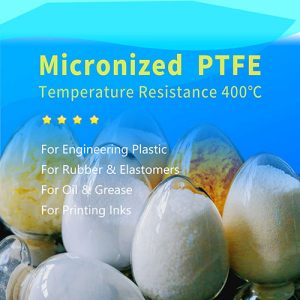
ptfe micropowder
High Friction Components: Moving POM parts require low surface friction to reduce wear.
Mold Sticking: POM’s high crystallinity can cause difficulties in demolding.
Surface Defects: Scratches and streaks can occur during handling or post-processing.
Chemical Resistance: Parts must withstand oils and other lubricants.
Improved Lubrication: Reduces friction during processing and in functional parts.
Scratch Resistance: Waxes form a thin protective layer, minimizing surface damage.
Mold Release: Easier demolding leads to higher productivity and fewer defects.
Enhanced Surface Finish: Uniform wax dispersion yields smooth, defect-free surfaces.
Precision Gears: FT wax added to POM gears reduced wear and improved operational life in automotive applications.
Electrical Components: PE wax improved mold release and surface quality in POM housings for connectors.
Wax Type: FT and PE waxes preferred for higher crystallinity plastics like POM.
Processing Temperatures: Must withstand POM processing (~200–220°C).
Particle Size: Fine wax (<10 μm) ensures smooth surface finish.
POM components require low friction, high precision, and surface durability. Wax additives provide a reliable way to enhance these critical properties.
Reach out to our experts today to select the ideal wax additive for your POM formulations. Sample support and technical guidance are available for optimal results.
 Leave a message

We’ll get back to you soon