

2025-12-09 Pageview:543
In coating formulations, achieving the right balance of smoothness, friction reduction, leveling, and surface durability is essential. Two categories of additives—slip agents and wax additives—are often used for similar purposes, yet they differ in chemistry, mechanism, and performance. Many formulators choose between them without fully understanding how each behaves in the coating film. However, selecting the appropriate additive can significantly impact scratch resistance, handling feel, appearance, and long-term durability. While both contribute to improving surface properties, slip agents and wax additives play distinct roles that should be strategically considered depending on the coating system and performance requirements.
Slip agents are primarily designed to decrease surface friction, making the coating feel smoother and more resistant to blocking or sticking. They typically work by migrating to the coating surface during film formation and creating a lubricating layer. Common slip agents include silicone oils, modified polysiloxanes, and fluorosurfactants. These materials offer fast surface migration and provide strong slip even at low dosage. Their main advantage lies in the significant reduction of dynamic and static friction, resulting in improved hand-feel and better handling behavior for packaged products. However, because slip agents are highly migratory, they may sometimes influence adhesion between layers or cause printability issues, especially in packaging and ink applications.
Wax additives, on the other hand, are more multifunctional. Unlike slip agents, micronized waxes and wax emulsions integrate into the coating matrix with varying degrees of migration. Their contribution goes beyond slip: they enhance scratch resistance, abrasion resistance, matting control, and water repellency. For example, micronized PE wax provides mechanical toughness at the coating surface, acting as micro-scale protective particles that resist scratches and rubbing. Wax emulsions offer hydrophobicity and anti-blocking effects in water-based formulations, while Fischer-Tropsch waxes improve hardness and mar resistance. Because wax additives can be selected by melting point, hardness, and particle size, they offer greater formulation flexibility compared to slip agents.
In terms of surface appearance, slip agents often create a visibly smoother or glossier surface due to their lubricating nature, whereas wax additives can produce varied effects depending on their particle size. Fine micronized waxes maintain gloss while adding slip, whereas larger particles contribute to controlled matting. Slip agents rarely provide matting; they mainly influence feel rather than appearance. This makes wax additives the better choice for coatings requiring specific gloss levels or long-lasting resistance to burnishing.
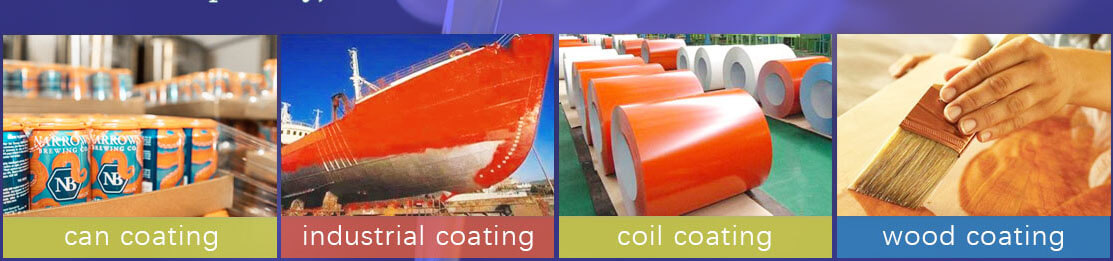
Durability also differentiates the two categories. Slip agents tend to migrate continuously to the surface, which can create long-term slip but does not enhance mechanical strength. In contrast, wax additives reinforce the coating’s top layer, improving abrasion resistance and resisting wear over time. This makes wax additives essential in wood coatings, industrial coatings, UV systems, and metal protection. Slip agents alone cannot provide this level of durability.
Another key difference lies in compatibility. Wax additives are available in many chemistries—PE, PP, FT, amide, PTFE blends—and can be matched with a wide range of resin systems. Slip agents, particularly silicone types, may sometimes cause issues such as intercoat adhesion problems, crater formation, or printability interference. Their high mobility can also lead to surface defects if the formulation is not balanced correctly. Therefore, wax additives are often preferred when a coating must maintain both high durability and stable surface behavior.
For formulators, the ideal solution often involves a combination of both types. Slip agents deliver immediate and strong surface slip, while wax additives provide mechanical reinforcement and long-term resistance. In fast-curing systems such as UV coatings, synergistic use can improve flow, leveling, and scratch resistance simultaneously. However, careful dosage adjustment is required to prevent surface defects.
Understanding these differences enables formulators to design coatings that achieve the desired touch, appearance, and durability. Slip agents excel in friction reduction and handling feel, while wax additives provide multifunctional protection and reinforce the coating surface. Selecting the right type based on performance needs ensures a balanced and effective formulation.
TIANSWAX supplies micronized waxes, wax emulsions, and specialty slip-enhancing additives designed for a wide range of coating systems. If you need guidance on choosing between slip agents and wax additives, contact us for technical support, sample recommendations, and tailored formulation solutions.
 Leave a message

We’ll get back to you soon