

2026-01-16 Pageview:178
Wax additives are widely used in plastics to improve processing behavior and surface performance. Among the most common options, polyethylene (PE) wax, polypropylene (PP) wax, and PTFE wax are often considered by formulators and engineers. Although all three belong to the same functional category, their properties, mechanisms, and application suitability differ significantly. Choosing the right wax additive is not simply a matter of cost or availability, but of matching material performance with processing conditions and end-use requirements.
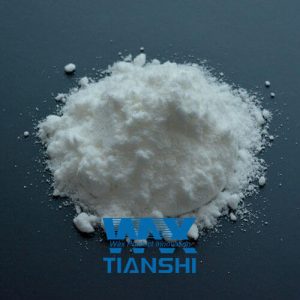
PE wax is known for its balanced performance. It provides effective lubrication during processing, improves flow, enhances mold release, and offers moderate scratch and abrasion resistance. Because of its good compatibility with many thermoplastics, PE wax is widely used in PVC, masterbatch, polyolefins, and engineering plastics. It reduces melt viscosity and internal friction, helping improve dispersion of pigments and fillers while maintaining stable mechanical properties.
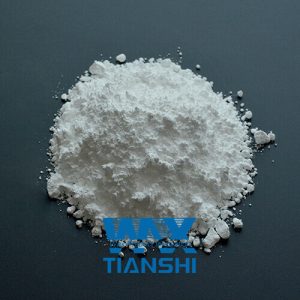
PP wax, on the other hand, is characterized by higher hardness and a higher melting point. This makes it particularly effective when surface durability is a priority. In applications where scratch resistance, mar resistance, or surface protection is critical, PP wax often outperforms PE wax. However, due to its lower compatibility with some polymer matrices, PP wax may require more careful formulation to ensure uniform dispersion and avoid processing defects.
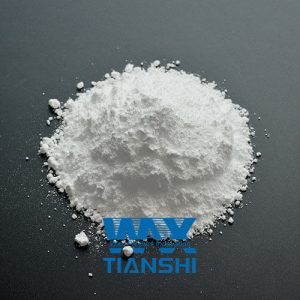
PTFE wax represents the high-performance end of the spectrum. With an extremely low coefficient of friction and outstanding chemical and thermal stability, PTFE wax provides superior slip, wear resistance, and anti-stick properties. It is commonly used in demanding applications such as high-end engineering plastics, specialty coatings on plastic parts, and components exposed to repeated mechanical stress. The main limitations of PTFE wax are cost and dispersion difficulty; achieving uniform distribution in a polymer matrix requires precise processing and high-quality dispersion technology.
From a processing perspective, all three waxes can improve flow and reduce friction, but their effects differ in magnitude and mechanism. PE wax offers broad processing benefits, making it suitable for general-purpose formulations. PP wax contributes less to flow improvement but delivers stronger surface hardness. PTFE wax provides the lowest friction and best anti-wear performance, often used when extreme surface durability is required.
Surface appearance and optical properties also influence selection. In transparent or high-gloss plastic products, wax additives must not introduce haze, streaking, or surface defects. Properly formulated PE wax grades can maintain clarity while providing protection. PP wax may slightly affect surface appearance at higher loadings due to its crystalline structure. PTFE wax, while excellent in performance, must be carefully controlled to avoid visible particles or texture changes.
Mechanical property retention is another key consideration. Excessive lubrication can reduce interfacial bonding in filled or reinforced systems, affecting strength or impact resistance. PE wax generally offers the best balance between processing improvement and mechanical stability. PP wax, because of its hardness, can improve surface durability without significantly softening the matrix. PTFE wax, if not properly dispersed, may create localized stress points, making formulation optimization essential.
Ultimately, the choice between PE wax, PP wax, and PTFE wax depends on application priorities. For general plastics, masterbatch, and PVC processing, PE wax is often the most versatile option. When enhanced scratch resistance and surface hardness are required, PP wax becomes the preferred choice. For applications demanding ultra-low friction, exceptional wear resistance, and long-term durability under mechanical stress, PTFE wax offers unmatched performance.
If you are evaluating PE wax, PP wax, or PTFE wax for your plastic application and need support in selecting the right additive, we provide technical guidance and customized solutions. Contact us with your polymer type, processing method, and performance requirements to receive a tailored recommendation.
 Leave a message

We’ll get back to you soon