

2026-05-28 Pageview:97
PTFE wax and silicone additives are two of the most commonly used surface modifiers in industrial coatings. Both materials improve the slip properties, surface smoothness, and anti-blocking properties of coatings, but they differ significantly in durability, coefficient of friction reduction, compatibility, and long-term performance.
Understanding the differences between PTFE wax and silicone additives is crucial for selecting the appropriate solution for a specific coating application.
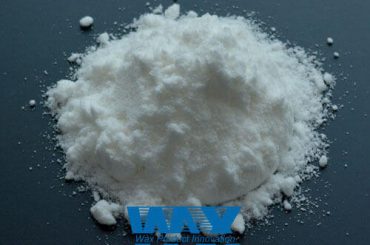
PTFE wax is widely known for its extremely low coefficient of friction and excellent abrasion resistance. It exhibits excellent scratch resistance, abrasion resistance, and scratch resistance in industrial coatings, automotive coatings, powder coatings, and packaging coatings.
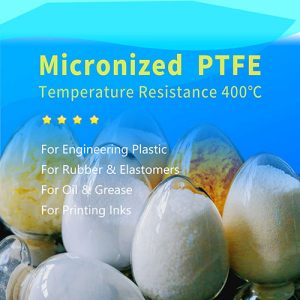
ptfe micropowder
Silicone additives are primarily used to improve surface leveling, smoothness, flowability, and slip properties. They help reduce surface defects (such as pitting) and improve coating appearance.
One of the main differences between these two additives is their scratch resistance. Due to its hard granular structure and excellent lubrication properties, PTFE wax generally exhibits superior abrasion resistance and mechanical wear resistance.
Silicone additives can improve surface smoothness, but their durability may not be as good as PTFE wax in high-abrasion environments.
Another key difference lies in surface feel and smoothness. Silicone additives typically create a very smooth, silky surface with excellent flowability.
While PTFE wax also improves smoothness, it focuses more on functional surface protection and durability.
Both materials improve anti-blocking properties, especially in coatings for films, packaging, and stacked industrial products.
Compatibility is another important consideration. Silicone additives typically work effectively at low dosages and have broad compatibility with many resin systems.
PTFE wax requires good dispersibility and appropriate particle selection to achieve stable formulations and optimal performance.
Gloss and transparency properties may also differ. Some silicone additives improve surface leveling and gloss, while excessive PTFE wax, if improperly formulated, may slightly affect optical properties.
In many advanced coating systems, PTFE waxes and silicone additives are often used together to balance slip properties, scratch resistance, leveling, and gloss.
The choice between PTFE wax and silicone additives depends on application requirements, desired surface properties, durability goals, and formulation design.
If you are evaluating the suitability of PTFE wax or silicone additives for your coating application, our technical team can help you choose the solution best suited to your formulation. Please contact us for technical support and product recommendations.
 Leave a message

We’ll get back to you soon