

2026-07-23 Pageview:3
Wax emulsions enhance the abrasion and scratch resistance of coatings through two mechanisms:
Abrasion resistance mechanism: Wax particles at the surface bear the initial abrasive force, protecting the base resin. Tests show that adding 3% of a suitable wax emulsion to industrial coatings can improve scrub resistance by over 50%.
Reduction of friction coefficient: The wax layer converts sliding friction into rolling friction, significantly reducing surface damage. Polyethylene wax emulsions can lower the coating’s friction coefficient by 30%–50%.
Hardness contribution: Micro-particles of high-hardness waxes (such as HDPE and PTFE) provide surface support, enhancing overall abrasion resistance. Studies indicate that adding 3% HDPE wax emulsion can increase pencil hardness from 2H to 4H and improve scratch resistance by 50%.
Tactile Improvement
Wax emulsions impart the following tactile characteristics to coatings:
Slippery feel: Reduced friction coefficient results in a silky-smooth surface;
Refined texture: The wax film fills in microscopic irregularities, creating a more uniform surface;
Waxy feel: Appropriate wax dosage provides a premium, waxy tactile quality;
Tests show that adding 2%–5% wax emulsion to industrial coatings significantly improves tactile ratings. Carnauba wax emulsions and PE wax emulsions perform exceptionally well in terms of both feel and gloss.
Anti-blocking Performance
Wax emulsions offer an effective solution to coating blocking (sticking) issues:
Room-temperature anti-blocking: Coatings containing wax emulsions do not stick together during stacking or winding. In tests involving stacked samples (subjected to 1.5 t/m² pressure after overnight drying), wax-treated paint films separated easily.Hot Blocking Resistance: Even under high-temperature conditions (such as stacking immediately after drying at 40°C), high-performance wax emulsions (e.g., Tianshi wax emulsions) maintain excellent anti-blocking properties, matching international benchmark products.
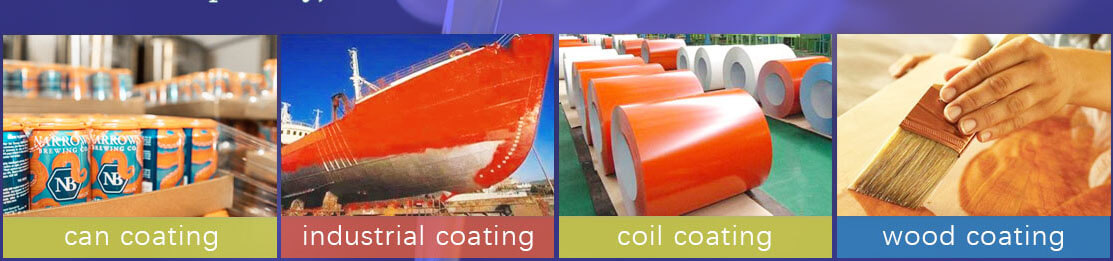
Application Scenarios: Coil coatings, stacked metal parts, production lines requiring rapid stacking, etc.
Water and Stain Resistance
Wax emulsions significantly enhance the hydrophobicity and stain resistance of coatings:
Increased Contact Angle: When applied alone, cationic wax emulsions can achieve a water contact angle of 101.9°, far exceeding the ~85° seen in anionic systems.
Lotus Effect: The microscopic rough structure formed by wax particles further boosts hydrophobicity.
Stain Resistance: Low surface energy reduces the adhesion of dust and stains, making cleaning easier.
Recoatability
Oxidized waxes and specific modified wax emulsions have minimal impact on recoatability. Non-oxidized waxes may affect inter-coat adhesion; this can be mitigated by:
Selecting oxidized or polar-modified waxes
Controlling the dosage (≤3%)
Optimizing the sanding process
As highly efficient surface modifiers in industrial paints, wax emulsions utilize a unique surface-enrichment mechanism to significantly improve abrasion resistance, scratch resistance, surface slip (tactile feel), and anti-blocking properties, even at low dosage levels.
Selecting the right type, particle size, melting point, and emulsification system—and following proper incorporation procedures—is key to maximizing performance.
In practical applications, engineers must select the most suitable wax emulsion based on specific requirements (e.g., high gloss vs. matte finish; abrasion resistance vs. tactile feel vs. anti-blocking) and cost considerations, subsequently verifying performance through systematic testing. As technology advances, nano-scale, functionalized, and eco-friendly wax emulsions will offer even greater possibilities for industrial coatings. The application of wax emulsions serves not only as a means to resolve specific technical issues but also as a crucial pathway for enhancing product competitiveness and achieving differentiation. Mastering their mechanisms of action, selection principles, and application techniques will enable formulation engineers to develop industrial coating products with greater market competitiveness.
 Leave a message

We’ll get back to you soon