

2026-05-29 Pageview:94
Powder coatings are widely used in industrial equipment, home appliances, automotive parts, metal furniture, and construction due to their durability and environmental benefits.
To achieve better surface protection and long-term appearance retention, powder coating formulators often use Fischer-Tropsch waxes as high-performance additives.
Fischer-Tropsch waxes are particularly suitable for powder coatings due to their high melting point, excellent hardness, and good thermal stability.
Compared to traditional waxes, Fischer-Tropsch waxes offer superior scratch and abrasion resistance while maintaining stable processing performance.

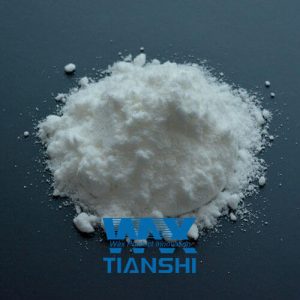
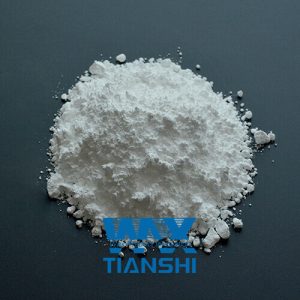
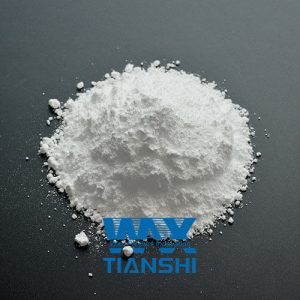
When micronized Fischer-Tropsch waxes are added to powder coating formulations, the particles migrate to the coating surface during curing, forming a thin lubricating layer.
This lubricating layer reduces friction and improves coating durability.
One of the main advantages of Fischer-Tropsch waxes in powder coatings is improved scratch resistance. Coated metal surfaces are frequently subjected to handling, transportation, installation, and cleaning.
FT waxes help reduce surface damage and improve long-term appearance retention.
Their excellent slip properties are another important advantage. Lower surface friction reduces wear and improves surface smoothness.
Coated parts also exhibit improved anti-blocking properties during storage and transportation.
FT waxes are widely used in epoxy, polyester, blended, and polyurethane powder coating systems.
Since powder coatings typically cure at high temperatures, the high melting point and thermal stability of FT waxes are their main advantages.
Choosing the optimal FT wax for powder coatings depends on several factors, including particle size, melting point, hardness, and compatibility with the resin system.
Fine micron-sized particles generally provide a smoother surface and better gloss retention while still maintaining strong scratch resistance.
Dosage optimization is crucial. Excessive wax dosage may reduce gloss or affect recoating performance, while insufficient dosage may fail to provide adequate surface protection.
Different powder coating applications, such as architectural coatings, appliance coatings, and automotive coatings, may require different grades of FT wax.
In many advanced formulations, FT waxes are blended with PTFE waxes or polyethylene waxes to balance cost, slip, and scratch resistance.
As powder coating technology continues to advance towards greater durability and superior surface finishes, Fischer-Tropsch waxes remain among the most valuable synthetic wax additives.
If you are developing powder coating formulations and require improved surface durability and smoothness, our micronized Fischer-Tropsch wax products offer a reliable, high-performance solution. Please contact us for technical support and product recommendations.
 Leave a message

We’ll get back to you soon