

2026-09-07 Pageview:3
Water-based industrial coatings commonly require screen printing for markings, nameplates, and graphics. However, improper selection of anti-scratch wax additives can reduce coating surface tension, leading to ink pinholes, poor adhesion, and lettering fading – thus creating a real contradiction between “scratch resistance and abrasion resistance” and “screen printing adhesion.”
OE-6303 is a non-ionic modified polyethylene wax emulsion launched by Nanjing Tianshi New Material Technology Co., Ltd. It is APEO-free, with a solid content of 39-41%, melting point of 124-127℃, applicable pH range of 2-12, and recommended addition of 3-5%. It exhibits excellent anti-blocking, scratch resistance, and abrasion resistance in inks, coatings, and overprinting varnishes, with minimal impact on gloss.
I. On-site Business Experience: The Customer Wants Scratch Resistance, But Fears Printed Text Wearing Off
A customer specializes in producing water-based industrial coatings, with downstream finished products primarily consisting of metal panels, electrical equipment housings, and industrial control components. These parts share a common characteristic: after the paint film is applied, the surface needs to be screen-printed with the brand logo, model parameters, warning labels, and operating instructions. The customer’s demands were very clear, yet also very conflicted:
On the one hand, the coating must be scratch-resistant and abrasion-resistant. From coating off the production line, assembly, packaging to final installation, the parts undergo multiple handling, stacking, and wiping processes; the metal housings are also repeatedly touched by keys, tools, and fingernails during use. Once the paint film is scratched or abraded, the exterior part is immediately rejected.
On the other hand, the screen-printed markings must be accurate, adhere firmly, and not wear off. If the model number or nameplate text on the panel shows ink peeling, missing strokes, or broken lines during assembly or use, it is a functional defect that the customer finds completely unacceptable.
Upon receiving the inquiry, the sales staff suggested switching to OE-6303 nonionic modified polyethylene wax emulsion from Nanjing Tianshi New Material Technology Co., Ltd., and arranging for samples to be sent to the customer. The customer was instructed to create samples in their own system at three concentration levels: 3%, 4%, and 5%, focusing on verifying two key aspects: the coating’s scratch and abrasion resistance, and the adhesion of the ink layer after screen printing.
II. The Pain Points and Adhesion Mechanism of Screen Printing Fading: The Problem Lies in “Surface Tension”
Screen printing is a widely used printing method in the industrial marking field: ink is transferred to the substrate surface through the mesh of the screen printing plate under the pressure of a squeegee. The ink layer is thick and has strong covering power, making it particularly suitable for marking text and color blocks on metal and plastic panels.
From a process sequence perspective, these types of workpieces are “coated first, then screen printed”: the coating first forms a film and cures on the workpiece surface, and then the ink is printed on top of the coating. Therefore, the surface condition of the outermost layer of the coating directly determines the wetting, spreading, and anchoring quality of the ink. Any component in the coating formulation that alters surface properties—especially various surface-lubricating agents—will be accurately reflected in the screen printing process.
2.1 Ink Adhesion Depends on “Dyne Value”
The wetting and adhesion of ink on the coating surface follows a basic physical premise: the surface tension of the substrate must be higher than the surface tension of the ink for the ink to spread fully, wet the surface, and “anchor” itself to the surface after film formation. Industry experience suggests:
The surface tension of the coating/substrate needs to reach 38 mN/m (dynes) or higher for good ink adhesion;
For scenarios requiring fine graphics and high abrasion resistance, a surface tension of 42 dynes or higher is recommended;
As a comparison, untreated PE (polyethylene) surfaces have a surface tension of only about 30-32 mN/m, making them a typical difficult-to-print material. After corona treatment or other surface treatments, the surface tension can be increased to 38-42 mN/m to meet printing requirements.
III. Why OE-6303 is “Scratch-resistant and Doesn’t Affect Screen Printing”
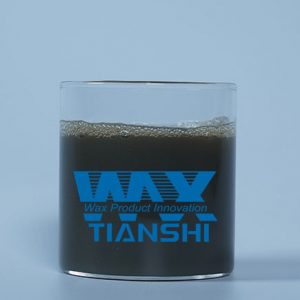
OE-6303 is a modified polyethylene wax emulsion from Nanjing Tianshi New Material Technology Co., Ltd. It is nonionic and appears as a creamy-white liquid.
3.1 Nonionic Modified System: Wide pH Range Compatibility (2-12), No Conflict with Water-Based Coatings and Inks
OE-6303 uses a nonionic emulsification system with a product pH of 5-8 and an applicable pH range of 2-12. Nonionic systems are not stabilized by charge, minimizing interference with various resin emulsions and anionic/nonionic dispersion systems commonly found in water-based industrial coatings. It is less prone to demulsification and flocculation due to electrolyte and pH fluctuations. More importantly, water-based inks used in screen printing are themselves complex dispersion systems—the wax additives and inks “meet a second time” on the coating surface, ensuring good system compatibility and preventing interfacial repulsion.
3.2 Dispersion Quality Behind “Minimally Impactful Gloss”
OE-6303 has “minimal impact on gloss.” Gloss is a mirror reflecting the dispersion state of wax microparticles: the more uniformly the wax microparticles are dispersed in the system and the more moderately enriched the surface layer, the less likely they are to cause optical disturbances on the paint film surface. This characteristic is corroborated by printability—a uniformly dispersed and controllably enriched wax layer neither destroys gloss nor forms a thick, loose, weak interface layer on the surface, allowing the ink layer to adhere effectively to the coating.
3.3 APEO-Free: Compliance Value Also Affects the Printing Industry Chain
OE-6303 is APEO-free (alkylphenol polyoxyethylene ether compounds). For coating customers, APEO-free not only means their products are more likely to pass environmental testing, but also means that downstream printing, packaging, and export processes will not be subject to compliance risks due to coating additives—this is especially important in scenarios such as metal packaging and exported equipment panels.
IV. Scratch Resistance, Abrasion Resistance, and Anti-sticking Mechanism: Slip Layer, Coefficient of Friction, and Baking Adaptability
Having confirmed that it “does not hinder screen printing,” let’s return to the core function of OE-6303—scratch resistance, abrasion resistance, and anti-sticking.
4.1 Wax Particle Migration and Enrichment: Laying a Layer of “Ball Bearings” on the Paint Film Surface
During the film-forming process of water-based coatings, water evaporates and latex particles are compressed and aggregate to form a film. Modified polyethylene wax particles in the wax emulsion do not chemically bond with the resin; instead, they migrate and enrich (bloom) towards the paint film surface as water migrates and volume shrinks, forming an ultra-thin waxy slip layer on the outermost surface.
This slip layer functions similarly to a microscopic “ball bearing” or “slip carpet”:
**Reduces the coefficient of friction:** Polyethylene wax itself is a low surface energy solid. When an object (fingernail, fabric, cardboard, or another piece of paint film) slides across it, it first contacts the wax layer. The slip effect significantly reduces the coefficient of friction, thus mitigating scratches.
**Distributes contact load:** When scratched by a sharp object, the wax layer “catches” the external force through its slight slippage and abrasion, reducing the plowing and carving of the resin body by the hard object.
**Prevents sticking:** In stacked or rolled-up states, the two paint films contact the wax slip layer rather than the sticky resin surface. Combined with the solid properties of wax, this results in the “excellent anti-sticking properties” described by TDS.
**Improves feel and release:** The paint film’s feel changes from dry to smooth, and the lubricity and release properties of the topcoat are simultaneously improved.
The key is that this slip layer is “thin and uniform”: it’s thick enough to alter the surface tribological behavior without becoming a barrier to the ink—this is two sides of the same coin as the “moderate enrichment with minimal impact on gloss” mentioned in Section 4.
Based on customer feedback, this type of protection addresses the most frequent damage scenarios: sliding friction between coatings and between coatings and packaging cardboard during workpiece stacking and handling after production; dragging of gloves and tools on panel surfaces in the assembly workshop; and repeated contact with keys, fingernails, and cleaning cloths during end-use. Without the slip layer, these contacts act directly on the resin body, creating scratches and matte spots; with a uniform waxy slip layer, most of the frictional energy is “dissipated,” resulting in significantly shallower and fewer scratches, and the smooth surface itself reduces the tendency for adhesion during stacking.
V. Application Scenarios: From Screen Printed Panels to Metal Packaging
OE-6303 is suitable for the following typical scenarios:
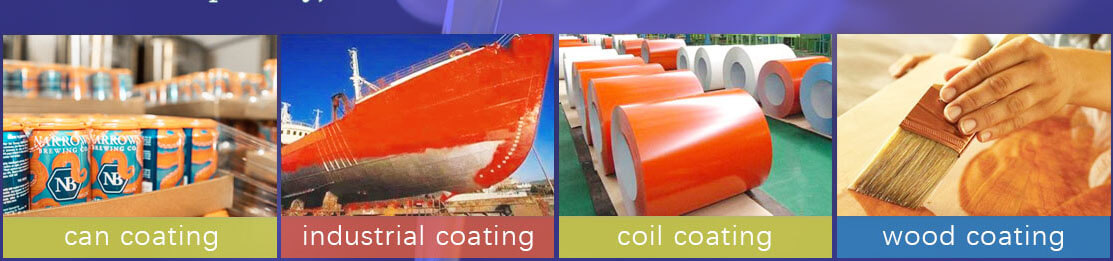
* Screen Printed Identification on Metal Panels and Electrical Housings: For industrial control panels, electrical equipment housings, metal nameplates, and other workpieces requiring pre-coating before screen printing, balancing coating scratch resistance and abrasion resistance with ink adhesion.
* Membrane Switch/Panel Applications: Water-based protective coatings for panels in medical equipment, home appliances, communication terminals, automotive central control systems, etc., requiring scratch resistance without affecting subsequent graphic printing.
* Metal Packaging and Overprinting Varnishes: Provides anti-sticking, scratch resistance, and abrasion resistance in overprinting varnishes, suitable for packaging systems requiring post-printing topcoat and anti-stick stacking.
* Heat Transfer Processes: Enhances scratch resistance and ink release properties for heat transfer processes, suitable as a protective layer for transferred graphics.
* Water-based Inks: Prevents ink clumping, enhances gloss, and provides excellent lubricity and scratch resistance in water-based inks.
* VI. Selection FAQ
Q1: After adding OE-6303, can screen printing still be performed normally on the coating surface? Will the text rub off?
Yes. The TDS of OE-6303 clearly states that it is suitable for inks, coatings, and overprinting varnishes, and has ink-releasing properties. It can prevent clumping in water-based inks, increase slip, and resist scratches. It is a wax additive compatible with printing systems.
Q2: Will wax additives cause the coating to lose gloss? Does OE-6303 have a significant impact on gloss?
The TDS states that it has “minimal impact on gloss” and can “increase the gloss of the topcoat.” The wax particles are evenly dispersed and moderately enriched on the surface, and will not cause significant optical disturbance. It is still recommended to confirm the gloss data in your own system by prototyping.
Q3: How should I choose between OE-6303 and silicone (silicone) slip additives? If the finished part will not be printed, transferred, or recoated after coating, the strong slippery feel of silicone can be considered. However, if the surface will be screen-printed, UV-printed, heat-transferred, or overprinted, the low surface energy isolation layer formed by silicone can easily cause pinholes, lettering loss, and adhesion failure. In such scenarios, non-ionic modified PE wax emulsions like OE-6303 are preferred.
Q4: What is the recommended addition amount? What are the effects of adding too much or too little?
The recommended addition amount for TDS is 3-5%, added while stirring during the final stage of mixing. Insufficient addition will result in insignificant scratch resistance and anti-blocking effects; excessive addition will lead to excessive migration and enrichment of wax particles on the surface, potentially reducing the surface tension of the coating and affecting screen printing wetting and adhesion. Please conduct tests in a gradient of 3%-4%-5% and take the lowest amount that achieves the desired performance.
Nanjing Tianshi New Material Technology Co., Ltd. has long focused on the research, development, production, and application services of polyethylene wax, oxidized polyethylene wax, modified wax, and functional additives such as wax emulsions and wax micropowders. Its products are widely used in water-based industrial coatings, inks, wood and plastic coatings, and metal packaging industries.
To address the typical need for water-based industrial coatings to be scratch-resistant and abrasion-resistant while ensuring that subsequent screen-printed markings do not bleed, the company can provide free samples of OE-6303 modified polyethylene wax emulsion.
 Leave a message

We’ll get back to you soon