

2026-09-16 Pageview:2
In continuous coil coating lines, topcoat scratches, metal marking (stack damage), and inter-coat blocking represent the three most frequent customer quality claims. Because pre-painted metal coils are coated before being formed, the paint film must withstand intense friction during coiling, uncoiling, roll-forming, and transit.
To protect high-gloss topcoats without sacrificing film appearance, modern waterborne formulations rely on functional additives. OE-6112B, an economical polyethylene wax emulsion developed by Tianshi New Materials, provides high-gloss surface protection and superior anti-scratch performance in waterborne coil topcoats.
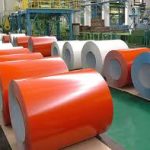
Unlike post-paint application methods, continuous coil coating exposes wet and curing films to extreme physical stress:
High Line Speeds (120–130 m/min): With steel or aluminum strip moving faster than 2 meters per second, micro-friction between the film and roller systems amplifies minor surface roughness into linear scratches.
High Temperatures & Short Cure Windows: Peak Metal Temperature (PMT) typically reaches 216°C – 232°C within a brief 30–40 second bake cycle. Additives must remain thermally stable and form a protective film rapidly without decomposing.
High Coiling Tension (140% Taper Tension): Heavy metal coils weighing up to 3,200 kg press topcoat against backcoat under immense force. Micro-motion during transit leads to severe metal marking and inter-layer adhesion (blocking).
4 Surface Defects Solved by Wax Emulsions
| Defect Type | Root Cause | OE-6112B Solution |
| Linear Scratches | Tooling or roll friction during uncoiling and roll-forming. | Lowers the surface coefficient of friction (CoF) to prevent surface gouging. |
| Metal Marking | Vibration-induced fretting wear between topcoat and backcoat under high tension. | Reduces real contact area and prevents fine paint debris accumulation. |
| Coil Blocking | High storage temperatures or incomplete cure causing layer adhesion. | Forms a hydrophobic micro-barrier at the surface to prevent inter-coat sticking. |
| Gloss Haze / Fogging | Coarse wax particle size scattering visible light. | Engineered micro-particle emulsion that preserves 60° high gloss levels. |
The scratch-resistance mechanism of OE-6112B relies on a 4-step physical migration process during water evaporation and high-temperature film formation:
Dispersion: Non-ionic wax particles remain evenly distributed in the waterborne polyester or acrylic system.
Migration (Blooming): As water evaporates, the surface tension differential drives hydrophobic wax micro-particles toward the coating-air interface.
Melting & Film Formation: Within the 216°C–232°C PMT window, the wax (melting point 125°C–135°C) fully melts and spreads into a continuous, low-energy protective layer.
Abrasion Shield: External physical contact shears against the slippery wax film rather than the resin matrix, reducing wear loss by up to 80%.
Product Type: Economical High-Gloss Polyethylene Wax Emulsion
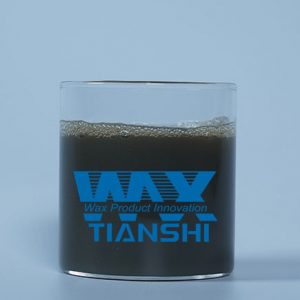
Appearance: Off-white liquid
Melting Point: 125°C – 135°C
Ionicity: Non-ionic
pH Value: 4.5 – 6.5 (Mildly acidic)
Solid Content: 39% – 41%
Recommended Dosage: 5% – 10% (Added at the final blending stage)
Packaging: 50 kg / 120 kg blue plastic drums
Storage Temperature: 0°C – 35°C (Protect from freezing)
Shelf Life: 12 months in unopened original packaging
Rule 1 — Add at the Final Stage: Always add OE-6112B at the end of post-blending after resin emulsions, pigments, and main additives are thoroughly mixed and cooled.
Rule 2 — Slow Addition under Agitation: Introduce the emulsion in a slow, steady stream under medium-to-low shear stirring. Avoid bulk dumping to prevent shock demulsification.
Rule 3 — Shake Before Use: Agitate or circulate drums before pumping to eliminate any minor concentration gradients after long storage.
The recommended loading level is 5% to 10% based on total formulation weight. We recommend starting at 5% and conducting ladder trials to balance anti-scratch, anti-blocking, and 60° gloss requirements.
OE-6112B uses a stable non-ionic emulsification system that is compatible with most waterborne polyester and acrylic/polyurethane coil systems. If your formula contains high-pH amine neutralizers or high electrolyte content, pre-test compatibility and thermal storage stability prior to full-scale production.
No. OE-6112B is specifically designed for high-gloss waterborne coatings and does not impair surface clarity or 60° specular gloss when used within the recommended dosage window.
OE-6112B is a waterborne emulsion and must be protected from freezing (maintain 0°C–35°C). Freezing irreversibly destroys the emulsion structure. During winter transit, heated or insulated freight containers are strongly recommended.
Enhance your waterborne coil topcoats with high-efficiency surface protection. Contact Nanjing Tianshi New Materials to request free samples, Technical Data Sheets (TDS), or custom formulating advice.
 Leave a message

We’ll get back to you soon