

2026-09-14 Pageview:11
Driven by strict global VOC regulations, 1000% solid, solvent-free epoxy heavy-duty anti-corrosion coatings have become the industry standard for steel structures, marine engineering, pipelines, and storage tanks. However, coating formulators and field engineers continuously face two major hurdles during production and high-build application:
In-can settling and heavy filler phase separation during storage.
Severe sagging, running, and thermal breakdown during high-build or high-temperature summer applications.
Solving rheology issues in solvent-free systems requires a clear understanding of additive activation behaviors and thixotropic stability. This technical guide breaks down key performance metrics and offers optimal rheological additive selection strategies.
Unlike conventional solvent-borne coatings, solvent-free epoxy resin matrix systems pose unique challenges:
High Resin Concentration & Specific Polarity: Pure resin matrices have distinct polarities and lack volatile solvents, making standard additive activation considerably harder.
Extreme High-Build Requirements: Single-coat DFT (Dry Film Thickness) demands are high. Even minor thixotropy losses lead to immediate sagging, edge pulling, and uneven coating films.
Wide Application Temperature Windows: In summer field applications (temperatures exceeding $40^\circ\text{C}$), standard additives often lose structural integrity, leading to a sharp decline in anti-sag performance.
Heavy Filler Loading: High pigment/filler content leads to hard caking, syneresis, and particle agglomeration upon prolonged storage.
Selecting the appropriate additive type is critical to balancing anti-settling, anti-sagging, and leveling properties:
| Additive Type | Key Strengths | Major Drawbacks | Application Limitations |
| Hydrogenated Castor Oil (HCO) | Excellent low-temp thixotropy, cost-effective | Poor heat stability; risk of seeds/seeding and heat breakdown | Not suitable for summer application or thick-film curing |
| Standard Polyamide Wax | Good solvent stability | High activation temperature ; weak thixotropy | Unsuitable for low-temp dispersion or ultra-high-build coats |
| Fumed Silica / Organoclay | Strong thickening and anti-settling | Poor water resistance; high mid-shear viscosity impairs leveling | Can cause surface defects and orange peel |
| Modified Micronized Polyamide Wax | Wide activation window, high thixotropy, excellent heat resistance | Requires precise grade matching for specific conditions | The optimal solution for high-build solvent-free epoxies |
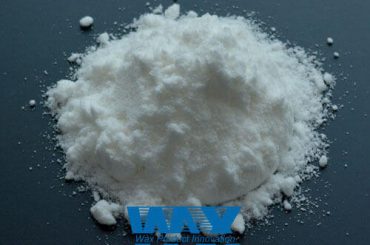
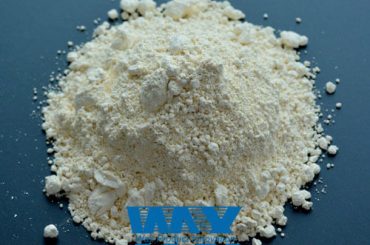
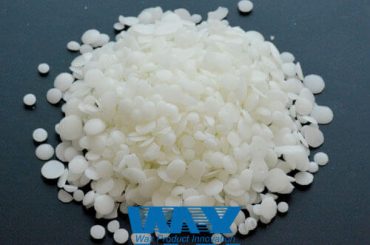
Testing of advanced micronized polyamide wax grades—such as NEW-0452B, NEW-0455, and NEW-0469 by Nanjing Tianshi—yields the following performance benchmarks for high-build solvent-free epoxies:
NEW-0452B: Activates efficiently at lower temperatures to build a robust thixotropic network during low-energy dispersion. Serves as a direct replacement for hydrogenated castor oil while eliminating heat-seeding risks.
NEW-0455 / NEW-0469: Delivers superior thixotropic strength and thermal stability, engineered specifically for high-build anti-corrosion coatings applied in high-ambient-temperature environments.
Ultra-Thick Single-Coat Capability: At a 1% dosage rate under standard activation protocols, formulations utilizing NEW-0455 or NEW-0469 achieve sag-free single-coat film thickness exceeding 1075 μm.
High-Temperature Thermal Stability: NEW-0455 maintains its 1075 μm anti-sag capability, significantly widening the operational window for field sprayers.
To optimize coat performance and storage stability, select additive packages based on specific processing parameters:
Option A: Low-Temperature Processing & Standard High-Build
Recommended: NEW-0452B
Benefits: Easy activation at lower temperatures, superior anti-settling, complete elimination of seeding risk, and a cost-effective alternative to castor oil derivatives.
Option B: Extreme High-Temperature Spraying & Heavy Anti-Corrosion Topcoats
Recommended: NEW-0455 or NEW-0469
Benefits: Maximum thixotropic recovery, exceptional heat resistance, single-coat thickness , and a reliable domestic alternative to imported premium polyamide waxes.
Q1: What is the primary cause of sagging in solvent-free epoxy coatings?
A1: Sagging is mainly caused by an inadequate thixotropic index or incomplete additive activation. At high ambient temperatures or high-build applications (), traditional additives (like hydrogenated castor oil) suffer thermal degradation and network collapse. Upgrading to heat-resistant modified polyamide waxes stabilizes the structure.
Q2: How can formulators prevent filler settling and phase separation in solvent-free epoxy storage?
A2: Incorporating a micronized polyamide wax additive (e.g., NEW-0452B) creates a dynamic three-dimensional network. This provides high viscosity at low shear rates (preventing pigment/filler settlement during storage) while maintaining low viscosity at high shear rates (ensuring smooth sprayability and flow).
Looking to optimize your solvent-free epoxy formulations or overcome high-temperature sagging challenges? Contact our technical engineering team today to request free samples and tailored formula consultations.
 Leave a message

We’ll get back to you soon