

2026-03-16 Pageview:56
Surface quality is a critical factor in the performance and appearance of many PVC products. Applications such as pipes, window profiles, decorative panels, and cable sheathing require smooth surfaces and consistent finishes to meet both functional and aesthetic standards.
During PVC processing, several factors can affect surface quality, including melt flow behavior, friction between the material and processing equipment, and the balance of lubrication in the formulation. If these factors are not properly controlled, surface defects such as roughness, streaking, or uneven textures may occur.
Wax additives play an important role in improving the surface finish of PVC products by enhancing lubrication and stabilizing the processing conditions.
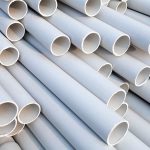
When wax additives are incorporated into PVC compounds, they help reduce friction between the molten PVC material and the metal surfaces of the extrusion or molding equipment. This reduction in friction allows the material to flow more smoothly through the processing system.
Smooth melt flow is essential for producing uniform surfaces. When the material moves consistently through the die, the resulting product surface becomes more even and visually appealing.
Another mechanism by which wax additives improve surface finish is through their influence on material release from molds or dies. In injection molding or extrusion processes, molten PVC must separate cleanly from the shaping surfaces. Insufficient lubrication can cause sticking, which may lead to surface defects or irregular textures.
Wax additives reduce adhesion between the PVC material and metal surfaces, allowing the finished product to release more easily. This contributes to smoother surfaces and fewer processing defects.
In addition to improving surface smoothness, wax additives may also enhance the gloss of PVC products. A well-lubricated processing system allows the material to form a more uniform outer layer, which can improve visual appearance.
Polyethylene wax is one of the most commonly used additives for improving PVC surface finish. Its excellent lubrication properties and compatibility with PVC systems make it suitable for a wide range of applications.
Micronized waxes can also be used in some formulations where fine dispersion and consistent lubrication are required. The small particle size allows these waxes to distribute evenly within the material, ensuring uniform performance.
However, achieving the desired surface finish requires careful formulation design. The balance between internal and external lubricants must be optimized to maintain proper PVC fusion while ensuring adequate lubrication.
Dosage levels must also be carefully controlled. Excessive wax loading may affect mechanical properties or interfere with the fusion process, while insufficient lubrication may not provide the desired surface improvement.
By selecting appropriate wax additives and optimizing processing conditions, manufacturers can significantly improve the surface quality of PVC products while maintaining efficient production.
If you are looking to improve the surface finish and processing stability of your PVC products, our wax additives offer reliable lubrication solutions for PVC extrusion and molding. Contact us to learn more about suitable products for your formulation.
 Leave a message

We’ll get back to you soon