

2025-11-10 Pageview:187
In the adhesives industry, balancing tack, set time, and handling characteristics is critical for achieving high-quality bonds across different substrates. Whether for hot-melt adhesives, pressure-sensitive adhesives, or water-based glues, the performance of the final product depends heavily on the formulation of additives. Among these, micronized wax has emerged as a versatile tool for enhancing tack control, reducing blocking, and improving surface properties without compromising adhesion.
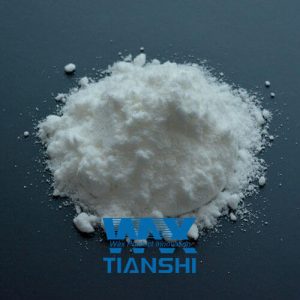
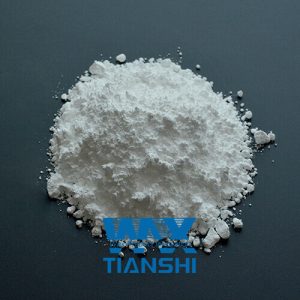
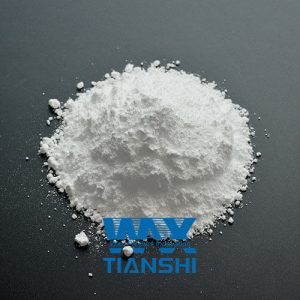
Micronized wax, often based on polyethylene (PE) or polypropylene (PP), consists of ultra-fine particles that disperse easily within adhesive matrices. Its primary function is to regulate the surface and bulk properties of the adhesive. By forming a thin lubricating layer at the interface, it reduces excessive stickiness, preventing unwanted adhesion between coated surfaces during storage or transport—a phenomenon known as blocking.

In pressure-sensitive adhesives (PSAs), micronized wax allows formulators to fine-tune tack and peel strength. Too much tack can make the adhesive difficult to handle, while too little can reduce bonding reliability. Incorporating micronized wax creates a controlled surface migration effect, moderating stickiness while maintaining cohesive strength. This ensures a consistent bonding performance across a variety of substrates, including paper, plastic films, textiles, and metals.
In hot-melt adhesives, micronized wax provides both internal and external lubrication. Internally, it reduces melt viscosity, enabling smoother flow and uniform application at lower temperatures. Externally, it minimizes adhesion to equipment surfaces, preventing buildup on nozzles, rollers, or dies. This not only improves process efficiency but also reduces maintenance and downtime.
Another critical advantage of micronized wax lies in anti-blocking and surface protection. During roll-to-roll processing, coated adhesive films or laminates are prone to sticking together. The fine wax particles create a micro-lubricated layer on the surface, preventing adhesion between layers without compromising the bond when activated. This property is particularly important for tapes, labels, and film laminates, where consistent unwind force is required for efficient application.
Micronized wax also contributes to enhanced abrasion and scratch resistance in adhesive coatings. By forming a protective microfilm at the surface, it improves resistance to mechanical stress during handling, cutting, or packaging. This ensures that the product maintains a clean, defect-free appearance even in high-speed processing environments.
Compatibility with the adhesive matrix is key to maximizing the benefits of micronized wax. Oxidized or functionalized grades exhibit better dispersion and adhesion within polar adhesives, such as EVA or acrylic-based systems. Non-polar grades are better suited for polyolefin or hot-melt systems. Selecting the appropriate particle size and surface treatment allows formulators to optimize migration, surface coverage, and final adhesive properties.
Sustainability considerations are also shaping the use of wax additives in adhesives. Modern micronized waxes are designed to be low-odor, low-VOC, and compatible with environmentally friendly adhesive formulations. Their stability reduces waste and enhances the consistency of long-term storage, making them suitable for both industrial and consumer applications.
For manufacturers looking to improve adhesive handling, control tack, and reduce blocking issues, TIANSWAX micronized waxes offer reliable and customizable solutions. Our products are engineered for consistent particle size, high purity, and optimized surface activity, ensuring superior performance across a wide range of adhesive formulations.
Contact TIANSWAX today to explore our micronized wax solutions for adhesives and achieve better tack control, anti-blocking performance, and enhanced processing efficiency in your products.
 Leave a message

We’ll get back to you soon