

2026-03-06 Pageview:153
Paper and paperboard remain essential materials in modern packaging, printing, and industrial applications. From food packaging papers to corrugated boxes and specialty coated papers, manufacturers are constantly seeking ways to improve the performance of paper surfaces. One of the most common challenges in paper production is achieving a balance between printability, water resistance, surface smoothness, and mechanical durability. Wax additives have become an important solution for improving these properties in paper coatings and paper processing systems.
In many packaging applications, paper must withstand exposure to moisture, friction, and mechanical handling during transportation and storage. Traditional paper fibers are naturally hydrophilic, meaning they easily absorb water. This can weaken the paper structure, reduce stiffness, and negatively affect print quality. To address these limitations, coating formulations are often applied to paper surfaces to enhance barrier properties and mechanical performance. Wax additives are frequently incorporated into these coatings to provide additional protection.
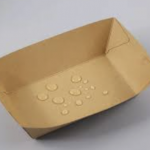
When wax emulsions or wax dispersions are added to paper coating formulations, they form a hydrophobic layer within the coating structure. During the drying process, wax particles migrate toward the surface and distribute evenly across the coated layer. This creates a thin protective film that reduces the ability of water to penetrate into the paper fibers. As a result, the treated paper exhibits improved water resistance and moisture stability, which is especially important for packaging materials exposed to humid environments.
In addition to water resistance, wax additives also play a significant role in improving the slip properties of paper surfaces. In high-speed printing and packaging operations, paper sheets often slide against machinery components or other sheets. If the paper surface has too much friction, it can cause feeding problems, surface scratches, or equipment jams. By reducing the coefficient of friction, wax additives allow paper surfaces to move smoothly through printing and converting equipment. This improves processing efficiency and reduces the risk of surface damage.
Surface protection is another key benefit of wax additives in paper coatings. Packaging papers are frequently subjected to mechanical stress during filling, stacking, and transportation. Without proper surface protection, the coating layer may become scratched or worn, which can reduce both the visual appearance and functional performance of the paper. Wax particles embedded within the coating structure act as micro-protective points that absorb frictional forces. This helps maintain the integrity of the coating layer and improves the durability of the paper surface.
Different types of wax additives can be used depending on the specific requirements of the paper product. Polyethylene wax emulsions are among the most commonly used materials in paper coatings because they provide good water repellency and slip performance while maintaining compatibility with water-based coating systems. These emulsions are particularly suitable for packaging papers, food wrapping papers, and coated printing papers.
In some cases, composite wax systems are used to achieve a combination of performance properties. For example, blending different wax types can help balance water resistance, flexibility, and coating smoothness. The particle size and distribution of the wax also play an important role in determining the final surface characteristics of the coated paper. Proper dispersion ensures that the wax forms a uniform protective layer without negatively affecting printability or coating adhesion.
Wax additives are widely used in a variety of paper products, including food packaging paper, grease-resistant paper, corrugated board liners, and specialty industrial papers. In food packaging applications, wax-based coatings can help protect the paper from moisture and oil contamination while maintaining the recyclability of the material. In corrugated packaging, wax additives can improve surface durability and reduce friction during automated packaging processes.
As the packaging industry continues to move toward more sustainable materials, paper-based solutions are gaining increased attention as alternatives to plastic packaging. In this context, wax additives provide an effective way to enhance the performance of paper materials without significantly altering existing production processes. By improving water resistance, slip behavior, and surface protection, wax-based coatings help expand the range of applications where paper can be used.
For paper manufacturers and coating formulators, selecting the right wax additive is essential to achieving optimal performance. Factors such as wax type, particle size, and compatibility with coating binders must all be carefully considered. With the correct formulation, wax additives can significantly improve the functional performance of coated paper while maintaining excellent processing characteristics.
If you are developing paper coatings for packaging paper, food paper, or industrial paper products, choosing the right wax additive can greatly enhance surface performance and moisture resistance. Our company supplies high-quality wax emulsions, micronized wax powders, and specialized wax dispersions designed for paper coating applications. Contact us to discuss your formulation needs or request samples for evaluation.
 Leave a message

We’ll get back to you soon