

2025-12-11 Pageview:146
In PVC pipe, profile, window frame, and cable extrusion, the choice of internal and external lubricants directly affects melt flow, plasticization rate, surface gloss, dimensional stability, and overall extrusion efficiency. Among all lubricant options, oxidized polyethylene wax (oxidized PE wax) has become one of the most widely used and reliable lubricants due to its balanced internal–external lubrication, strong thermal stability, and excellent compatibility with PVC formulations. As extrusion lines run faster and product quality requirements become stricter, oxidized PE wax plays an increasingly important role in ensuring smooth processing and stable final product performance.
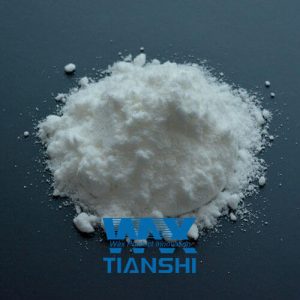
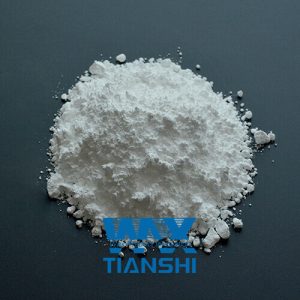
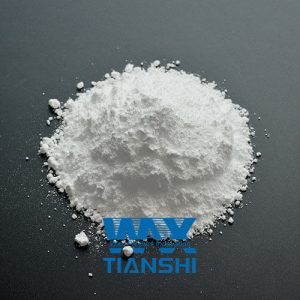
Oxidized PE wax is produced by controlled oxidation of polyethylene wax, introducing polar functional groups such as carboxyl and hydroxyl groups. These polar groups dramatically improve its dispersibility in PVC resin, allowing it to migrate evenly through the melt and deliver more precise lubrication. Unlike natural waxes or simple paraffin waxes, oxidized PE wax provides both internal and external lubricating functions—helping formulators maintain a stable melt viscosity while still ensuring smooth surface release.
In PVC extrusion, internal lubrication is essential for reducing friction between PVC molecules during the plasticization phase. Oxidized PE wax lowers torque, shortens gelation time, and supports uniform fusion of PVC resin and stabilizers. This results in faster extrusion rates, reduced energy consumption, and better uniformity in the melt flow. For rigid PVC pipes or profiles where strength and fusion quality are crucial, the internal lubrication of oxidized PE wax helps achieve a more controlled plasticization curve and reduces the risk of overheating or thermal degradation.
On the external lubrication side, oxidized PE wax reduces friction between the hot PVC melt and the metal surfaces of the barrel and die head. This helps prevent melt sticking, plate-out, die build-up, and surface roughness—problems that often cause production interruptions and inconsistent product appearance. When used in the optimal dosage, oxidized PE wax ensures smooth extrusion, improves surface gloss, and enhances dimensional accuracy. For high-gloss PVC profiles and electrical conduits, maintaining a clean and low-friction die surface is essential for uniform thickness and smooth outer surfaces.
One of the key advantages of oxidized PE wax is its strong thermal stability, especially in long production runs. It resists degradation at high processing temperatures, providing consistent performance even under demanding conditions. This stability makes it suitable for modern high-speed extrusion lines, where lubricants must withstand elevated shear and continuous heat exposure.
Oxidized PE wax also improves compatibility with PVC stabilizers, calcium-zinc additives, and processing aids. Its polar groups help it blend more effectively in Ca-Zn systems, compensating for the lower lubrication efficiency of traditional stabilizers. This is particularly important in environmentally friendly, lead-free PVC formulations where lubricity must be carefully controlled.
Another benefit is its ability to improve surface quality without sacrificing mechanical strength. Unlike excessive paraffin wax— which can weaken weld lines or reduce impact resistance—oxidized PE wax maintains the integrity of the fusion structure while still providing the required slip and release. This balance is valuable for PVC pipes and profiles that must meet strict pressure resistance, weathering performance, and dimensional stability standards.
The versatility of oxidized PE wax makes it suitable for a wide range of PVC applications, including pipes, profiles, siding, cable insulation, window frames, and WPC extrusion. Depending on the required melt flow, gloss level, and formulation compatibility, manufacturers can choose between different acid values and molecular weights to fine-tune lubrication efficiency.
If you are producing PVC pipes or profiles and looking for a high-performance lubricant that delivers consistent flow, gloss, and thermal stability, oxidized PE wax offers one of the most effective and economical solutions in modern extrusion technology.
We provide oxidized PE wax with customized acid values and molecular weights designed specifically for PVC pipe, profile, and WPC extrusion. Contact us for formulation recommendations and product samples.
 Leave a message

We’ll get back to you soon