

2026-01-15 Pageview:489
Lubrication is a fundamental element in PVC processing, directly affecting melt behavior, surface quality, and production efficiency. From rigid PVC pipes and profiles to flexible films and sheets, the selection of lubricants plays a decisive role in achieving stable processing and high-quality end products. Among the most important distinctions in PVC lubrication is the difference between internal and external lubricants.
Internal lubricants act within the polymer matrix. They reduce friction between PVC molecular chains, improving melt flow and facilitating fusion. By lowering internal resistance, these additives help achieve homogeneous melting and prevent localized overheating. Common internal lubricants include fatty acid esters, amides, and certain low-molecular-weight waxes compatible with PVC.
External lubricants, in contrast, primarily act at the interface between the molten PVC and metal surfaces such as screws, barrels, and calender rolls. Their main function is to reduce adhesion to processing equipment, improving release and surface finish. Paraffin wax, polyethylene wax, and certain metal soaps are typical external lubricants used in PVC formulations.
Understanding the balance between internal and external lubrication is essential. Excessive internal lubrication can reduce melt strength, leading to poor dimensional stability or surface defects. Too much external lubrication, on the other hand, may delay fusion and cause poor mechanical properties due to insufficient polymer chain interaction.
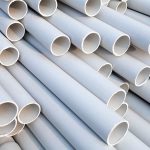
In rigid PVC applications such as pipes, fittings, and profiles, controlled fusion is critical. A well-designed lubricant system ensures that the material melts uniformly while maintaining enough viscosity for shaping and calibration. Internal lubricants support smooth fusion, while external lubricants prevent sticking to metal surfaces and improve demolding behavior.
For flexible PVC films and sheets, surface quality becomes a primary concern. External lubricants play a greater role in achieving smooth surfaces and preventing sticking during calendering or extrusion. Polyethylene wax, in particular, is valued for its ability to reduce surface friction without significantly affecting transparency or mechanical performance when properly formulated.
The choice of lubricant system also impacts thermal stability. PVC is sensitive to heat and prone to degradation if processing conditions are not well controlled. An optimized balance of internal and external lubricants reduces shear-induced heating and minimizes the risk of discoloration or degradation during processing.
Processing method is another key factor. In extrusion, internal lubricants improve flow through the die, while external lubricants facilitate release and prevent buildup on equipment. In calendering, external lubrication is essential to ensure smooth release from rolls and maintain consistent film thickness. In injection molding, both types must be carefully balanced to achieve good mold release without compromising part integrity.
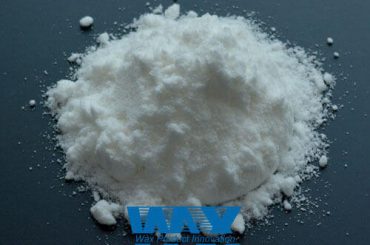
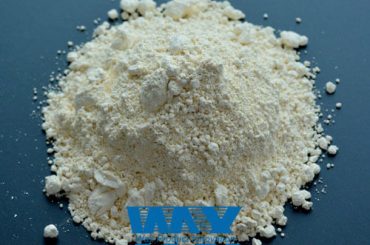
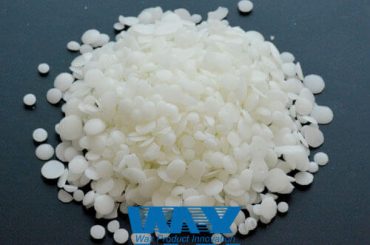
From a formulation perspective, polyethylene wax is widely used as an external lubricant due to its thermal stability, consistent performance, and compatibility with a wide range of PVC systems. Depending on molecular weight and particle size, PE wax can also provide a degree of internal lubrication, making it a versatile component in modern PVC formulations.
Ultimately, selecting between internal and external lubricants is not a binary choice but a matter of optimizing their ratio based on product type, processing conditions, and performance requirements. Laboratory testing and production trials are essential to determine the ideal balance for each application.
If you are optimizing PVC processing and need to balance internal and external lubrication for better fusion, surface quality, and productivity, our wax additives can support your formulation. Contact us to discuss your application—extrusion, calendering, or injection molding—and receive a customized lubricant solution.
 Leave a message

We’ll get back to you soon