

2026-03-05 Pageview:6
Fabric pilling is one of the most common quality complaints in the textile industry. Small fiber balls forming on the surface of garments not only affect appearance but also reduce perceived product value. Pilling occurs when loose fibers on the fabric surface become entangled due to friction during wear or washing. While fiber selection and yarn structure influence pilling behavior, finishing treatments play a decisive role in controlling surface fuzz formation. Among various finishing solutions, wax emulsions have proven to be an effective and cost-efficient method for improving pilling resistance.
Pilling primarily results from fiber-to-fiber friction. When fabrics rub against skin, other garments or washing machine surfaces, fibers break, migrate to the surface and form entangled pills. Reducing friction between fibers is therefore a practical strategy to minimize fiber breakage and fuzz accumulation. Wax emulsions function by depositing a micro-thin lubricating layer on individual fibers, decreasing surface friction and limiting mechanical stress.
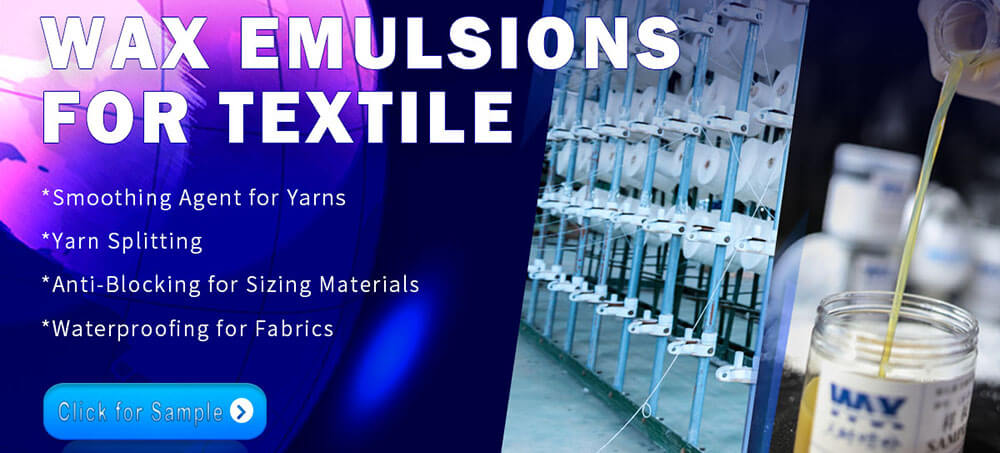
Unlike heavy resin treatments that may stiffen fabrics, wax emulsions provide lubrication without significantly affecting flexibility or breathability. This makes them especially suitable for apparel fabrics where softness and comfort are essential. By carefully selecting wax chemistry and particle size, manufacturers can enhance pilling resistance while preserving natural fabric drape.
Synthetic fibers such as polyester and blends are particularly prone to pilling because of their high strength and tendency to retain broken fibers on the surface. Wax emulsions help control this issue by reducing fiber entanglement during repeated abrasion cycles. In laboratory Martindale or random tumble pilling tests, optimized wax treatment can noticeably improve grading results.
Application methods typically include padding or spray finishing. Uniform distribution is essential to ensure consistent performance across the fabric width. Fine particle emulsions improve penetration into fiber interstices, enhancing anchoring and wash durability. Controlled drying and curing temperatures allow wax particles to coalesce and bond effectively to the fiber surface.
Compatibility with other finishing agents, such as softeners, anti-static agents or crosslinking resins, must also be evaluated. Balanced formulations ensure that wax lubrication complements rather than interferes with other functional treatments.
As consumer expectations for garment longevity increase, anti-pilling performance has become a key competitive factor for textile manufacturers. Wax emulsions provide a practical solution that enhances durability without increasing formulation complexity or production costs.
If you are facing pilling complaints or seeking to upgrade fabric durability, we can recommend specialized wax emulsions designed for textile anti-pilling applications. Share your fiber type, finishing process and test requirements with us. Contact us today for product recommendations and sampling support.
 Leave a message

We’ll get back to you soon