

2026-04-17 Pageview:60
Powder coatings are widely used in industries such as appliances, automotive components, architectural materials, and general industrial applications. They offer advantages such as solvent-free processing, high efficiency, and excellent environmental performance. However, achieving strong surface durability—especially scratch resistance—remains a key challenge.
During transportation, installation, and daily use, coated surfaces are frequently exposed to mechanical stress. Without proper formulation design, coatings can easily suffer from scratches, scuffs, and surface damage, leading to reduced aesthetic quality and shorter service life.
Polypropylene (PP) wax has become an important additive in powder coating formulations to address these issues. Due to its high hardness and excellent thermal stability, PP wax is particularly effective in improving scratch resistance and overall surface durability.

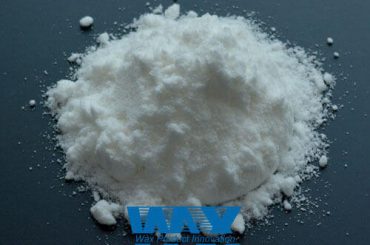
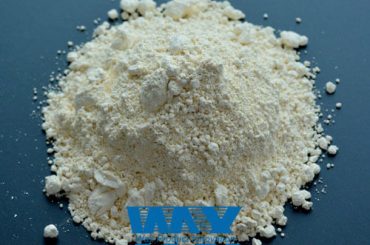
In powder coatings, PP wax is typically incorporated as a micronized powder. During the curing process, the wax becomes evenly distributed within the coating matrix. As the coating forms, the wax migrates toward the surface and creates a protective layer.
This surface layer acts as a barrier that reduces direct mechanical contact. The high hardness of PP wax allows it to resist deformation, thereby protecting the underlying coating from damage.
In addition to scratch resistance, PP wax also improves abrasion resistance and mar resistance. These properties are essential in applications where coatings are subject to repeated contact and friction.
Slip performance is another important benefit. By lowering the coefficient of friction, PP wax reduces the likelihood of surface damage during handling and assembly.
Selecting the right PP wax for powder coatings requires attention to several factors. Particle size is critical, as it influences surface smoothness and dispersion quality. Fine particles generally provide better performance and more uniform surfaces.
Melting point must be compatible with the curing temperature of the powder coating system. Waxes with appropriate thermal properties ensure stable performance during processing.
Compatibility with the resin system is also essential to avoid issues such as phase separation or poor surface appearance.
Dosage optimization plays a key role. While increasing wax content can improve scratch resistance, excessive amounts may negatively affect gloss or intercoat adhesion.
In high-performance formulations, PP wax may be used in combination with other waxes to achieve a balanced performance profile.
As powder coatings continue to replace liquid coatings in many applications, the demand for high-performance additives is growing.
If you are developing powder coatings and need to improve scratch resistance and durability, our PP wax products offer reliable performance and consistent quality. Contact us for technical support and product selection.
 Leave a message

We’ll get back to you soon