

2026-01-14 Pageview:70
Wax additives are widely used in printing inks to improve surface properties such as slip, rub resistance, and scratch protection. Among the most common forms are wax emulsions and wax powders. While both serve similar functional purposes, they differ significantly in handling, dispersion behavior, performance characteristics, and suitability for various ink systems. Understanding these differences is essential for formulators and printers seeking consistent quality and optimized production.
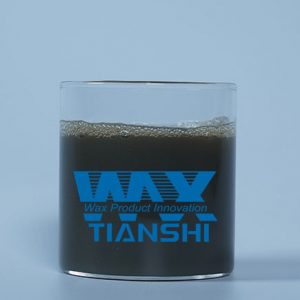
Wax emulsions are liquid formulations in which finely dispersed wax particles are stabilized in water. They are primarily used in water-based ink systems, where easy incorporation and process stability are critical. Because they are already in a dispersed state, wax emulsions can be added directly during the let-down stage without additional milling. This simplifies production, reduces processing time, and minimizes the risk of agglomeration.

In water-based inks, wax emulsions provide good surface slip, improved anti-blocking properties, and moderate rub resistance. They are especially suitable for packaging, labels, and paper-based applications where smooth processing and compatibility with aqueous binders are required. However, because the particle size in emulsions is typically smaller and more uniform, the surface protection effect may be less pronounced than that of wax powders in applications requiring high abrasion resistance.
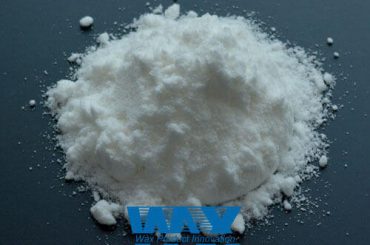
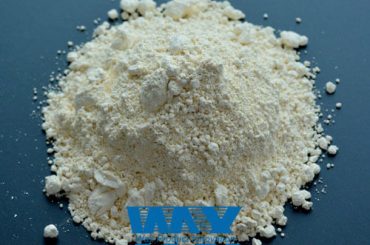
Wax powders, particularly micronized waxes, are solid particles with controlled particle size distributions. They are widely used in solvent-based, UV-curable, and high-performance ink systems. When properly dispersed, wax powders migrate to the ink surface during drying or curing, forming a micro-structured protective layer that significantly enhances rub and scratch resistance.
The key advantage of wax powders lies in their ability to deliver stronger surface protection. Larger particle sizes and higher hardness values create a more durable barrier against mechanical stress. This makes wax powders the preferred choice for high-speed printing, heavy-duty packaging, and applications where inks are exposed to repeated friction during handling and transportation.
However, wax powders require careful dispersion. Improper incorporation can lead to defects such as poor transparency, surface roughness, or inconsistent performance across print runs. Milling or high-shear mixing is often necessary to achieve uniform dispersion, which adds complexity to production. For some printers, this additional processing step may outweigh the performance benefits.
Another important consideration is gloss control. Wax emulsions generally maintain higher gloss levels, making them suitable for applications where visual appearance is critical. Wax powders, depending on particle size and loading level, may reduce gloss due to surface micro-roughness. In matte or satin finishes, this can be an advantage, but in high-gloss applications, careful formulation is required to avoid unwanted visual effects.
Compatibility with different ink systems also plays a role. Wax emulsions are primarily designed for water-based formulations, while wax powders offer broader compatibility across solvent-based, UV, and hybrid systems. In UV-curable inks, for example, wax powders provide excellent scratch resistance without interfering with curing, whereas emulsions may introduce moisture or stability issues.
Environmental and regulatory factors further influence selection. With the global shift toward water-based and low-VOC inks, wax emulsions are increasingly attractive for sustainable packaging solutions. At the same time, advances in synthetic wax powder technology have improved dispersion behavior and reduced the processing challenges traditionally associated with solid additives.
In practice, many formulators adopt a hybrid approach, using both wax emulsions and wax powders in different parts of their product portfolio. Emulsions may be selected for standard packaging and label inks, while powders are reserved for premium applications requiring maximum durability.
The optimal choice depends on the ink type, substrate, production process, and end-use requirements. Evaluating both options through laboratory testing and pilot production remains the most reliable method for determining the best additive strategy.
Whether you are working with water-based, solvent-based, or UV inks, we offer both wax emulsions and micronized wax powders tailored for printing applications. Contact us to compare performance, optimize formulations, and select the most effective solution for your ink system and production process.
 Leave a message

We’ll get back to you soon