

2026-01-14 Pageview:157
Rub resistance is one of the most critical performance indicators for packaging inks. Whether on flexible packaging, paperboard, labels, or cartons, insufficient rub resistance leads to scuffing, color loss, and an overall reduction in visual quality during printing, transportation, and end-use. For brand owners, this means compromised shelf appearance; for printers, it often results in complaints, reprints, and increased costs.
In many cases, poor rub resistance is not caused by a single factor but by the combined effects of ink formulation, substrate type, drying or curing conditions, and mechanical friction during handling. Understanding these factors is the first step toward selecting the right solution.

Packaging inks are exposed to repeated mechanical contact: stacking, rewinding, cutting, and final product logistics. When the ink film is not sufficiently protected, the pigment layer can be damaged, causing visible abrasion. In water-based, solvent-based, and even UV-curable systems, surface durability depends heavily on the film-forming resin, pigment dispersion quality, and the presence of functional additives.
One of the most common formulation issues is that the ink film remains too soft after drying. While softer films often provide better adhesion and flexibility, they are more vulnerable to scuffing. Increasing hardness through resin selection is one approach, but excessive hardness can reduce adhesion and lead to cracking, especially on flexible substrates. Therefore, improving rub resistance requires a balance between surface toughness and mechanical flexibility.
This is where wax additives play a key role. Waxes act primarily at the surface of the ink film, creating a micro-layer that reduces friction and protects the underlying pigment and binder. Unlike bulk modifications that alter the entire film structure, wax additives work at the interface where abrasion occurs. During drying or curing, finely dispersed wax particles migrate toward the surface, forming a lubricating, protective layer that enhances scuff and rub resistance without significantly changing gloss, color strength, or printability.
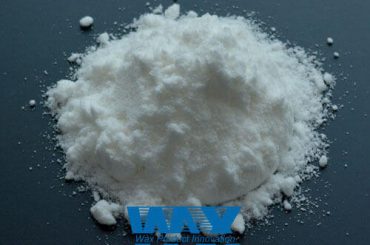
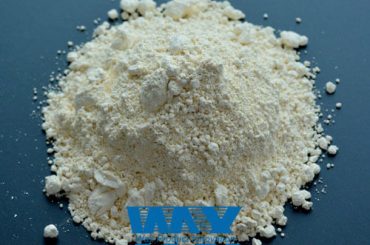
Different types of wax additives offer different performance characteristics. Polyethylene (PE) wax is widely used in packaging inks due to its balanced properties: good abrasion resistance, improved slip, and compatibility with many binder systems. Polypropylene (PP) wax typically provides higher hardness and better scratch resistance, making it suitable for applications where severe mechanical stress is expected. In some high-performance applications, PTFE or modified synthetic waxes are selected for their extremely low coefficient of friction, although cost and dispersion difficulty must be considered.
The effectiveness of wax additives also depends on particle size and dispersion quality. Micronized wax powders with controlled particle size distributions are particularly effective in inks because they disperse evenly and form a uniform protective layer. Poor dispersion, on the other hand, can lead to defects such as speckling, reduced transparency, or inconsistent surface properties. Therefore, proper incorporation—whether during grinding or let-down stages—is essential for achieving consistent rub resistance.
In packaging inks, overprint performance is another critical consideration. The wax layer must not interfere with ink adhesion between layers or with subsequent varnishing processes. Well-designed wax additives improve surface slip while maintaining sufficient interlayer bonding, ensuring that multi-color prints retain both visual quality and mechanical durability.
Environmental and regulatory trends are also shaping ink formulations. With the increasing adoption of water-based and low-VOC systems, formulators need additives that are compatible with aqueous binders and meet sustainability requirements. Modern wax emulsions and micronized wax powders are engineered to perform effectively in water-based packaging inks, providing rub resistance without compromising environmental compliance.
From a production perspective, improving rub resistance can reduce waste and downtime. Fewer rejected prints, lower rework rates, and improved customer satisfaction directly translate into better operational efficiency. Moreover, end-users benefit from packaging that maintains its appearance throughout distribution and handling.
Ultimately, selecting the right wax additive is not about choosing the “hardest” or “most expensive” option, but about matching surface performance with the specific ink system, substrate, and application requirements. Testing under real production conditions remains essential to fine-tune dosage levels and ensure compatibility with existing formulations.
By integrating high-quality wax additives into packaging ink formulations, manufacturers and printers can significantly enhance rub resistance, protect visual integrity, and meet the increasing performance demands of modern packaging markets.
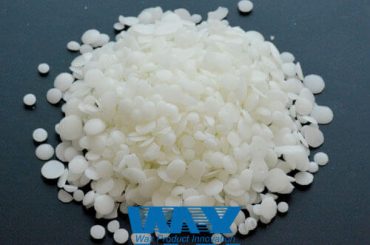
If you are experiencing scuffing, color loss, or poor rub resistance in your packaging inks, our wax additives—available as micronized powders, emulsions, and dispersions—can be tailored to your system. Contact us to discuss your ink type, substrate, and performance requirements, and receive a technical recommendation for improving surface durability and print quality.
 Leave a message

We’ll get back to you soon