

2025-12-08 Pageview:139
Polyethylene wax (PE wax) and oxidized polyethylene wax (OPE wax) are two of the most widely used additives in coatings and inks. Although they belong to the same polymer family, their performance differences are significant due to variations in molecular structure, polarity, and melting behavior. For formulators, choosing between PE wax and oxidized PE wax requires a clear understanding of how each material interacts with resins, pigments, and solvents in different systems. This article provides a detailed comparison to help manufacturers determine which wax is better suited for specific coating and ink applications.
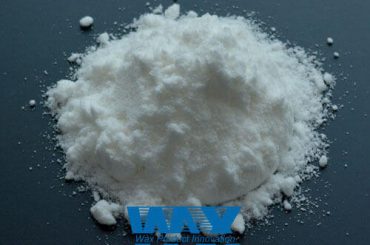
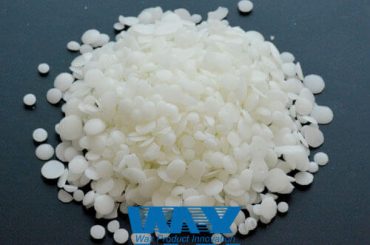
PE wax is valued for its hardness, lubricity, and ability to enhance abrasion resistance. Its non-polar, highly crystalline structure makes it a reliable surface-modifying additive that reduces friction and improves scratch resistance. When incorporated into coatings or inks, PE wax creates a fine protective layer that helps the film resist scuffing, rubbing, and mechanical wear. Because PE wax has excellent thermal stability and a narrow melting range, it performs consistently in both solvent-based and powder coating environments.

wax additive
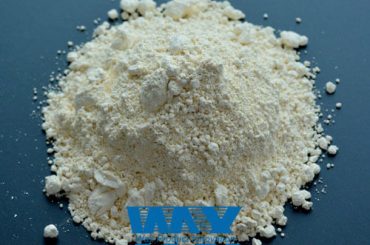
In contrast, oxidized PE wax contains carboxyl and hydroxyl functional groups introduced through controlled oxidation. This gives the wax improved polarity, making it more compatible with water-based systems, emulsions, and polar resins. As a result, oxidized PE wax provides better dispersibility and stability in waterborne coatings, flexographic inks, gravure inks, and aqueous systems that require uniform distribution. Its ability to improve slip, anti-blocking, and rub resistance while maintaining good compatibility makes it especially attractive for modern low-VOC and environmentally friendly formulations.
The friction-reducing effect is a key difference. Standard PE wax provides stronger surface slip and a lower friction coefficient, making it excellent for anti-scratch and anti-wear applications in industrial coatings, wood coatings, metal protection finishes, and high-durability ink systems. OPE wax also improves slip, but with a more balanced effect that avoids excessive surface slipperiness—this is particularly beneficial for packaging inks and aqueous overprint varnishes where reprintability or stacking stability is important.
Another important distinction is wetting and dispersion. In water-based systems, PE wax often requires additional surfactants or grinding processes to achieve stable distribution. OPE wax, however, can be emulsified much more easily due to its polar groups, creating stable wax emulsions that deliver excellent film hardness, anti-abrasion properties, and water resistance. This makes oxidized PE wax a preferred choice for waterborne wood coatings, paper coatings, textile coatings, and aqueous pigment dispersions.
Chemical resistance is another comparison point. PE wax typically provides stronger resistance to acids, solvents, and chemicals due to its non-polar nature. This makes it suitable for heavy-duty industrial coatings, marine systems, and metal protective layers. Oxidized PE wax still improves chemical resistance but places more emphasis on compatibility and dispersibility rather than pure barrier performance.
When evaluating gloss control, both PE wax and OPE wax contribute to matting or semi-matting effects depending on dosage and particle size. PE wax tends to produce a slightly drier, harder surface with a more pronounced matting effect. Oxidized PE wax produces gentler gloss reduction with smoother hand-feel and balanced surface uniformity—useful for packaging inks and waterborne formulations where controlled gloss is required.
The choice between PE wax and oxidized PE wax ultimately depends on the system and performance priorities. For solvent-based coatings, powder coatings, high-abrasion systems, and applications requiring maximum slip and scratch resistance, PE wax is typically the better option. For water-based coatings, aqueous inks, systems requiring improved compatibility, or applications where balanced surface properties are important, oxidized PE wax offers significant advantages.
If you are evaluating PE wax or oxidized PE wax for your coating or ink formulations, TIANSWAX can provide tailored recommendations based on resin type, application method, and performance targets. Contact us to request samples, data sheets, or formulation support for your specific project.
 Leave a message

We’ll get back to you soon