

2025-09-26 Pageview:160
PE wax (polyethylene wax) is a versatile coating additive widely used to improve surface slip, anti-blocking, abrasion resistance and certain processing aspects in both water-based and solvent-based coatings. Rather than acting as a liquid lubricant, PE wax typically migrates to the film surface during drying or curing and forms a thin solid micro-layer that lowers surface energy and the coefficient of friction. That micro-layer is what gives coated parts better slip, less blocking when stacked, and improved resistance to scuffs and light abrasion — all crucial for furniture, cabinetry, appliances and many industrial applications.

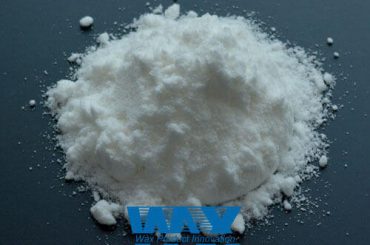
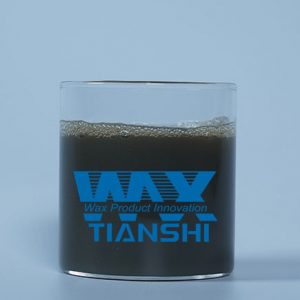
In water-based coatings, PE wax is commonly supplied as a stable emulsion or as a micronized powder with proper dispersants. During film formation the wax particles coalesce near the surface and create a discrete protective film that reduces tack and prevents panels from sticking to each other. This anti-blocking effect is especially valuable for stacked boards, doors, or laminated panels where handling and transport can cause surface damage. Because modern PE wax emulsions are engineered for aqueous compatibility, formulators can incorporate them with minimal disruption to rheology and film formation.
Solvent-based coatings typically use higher melting-point PE wax grades or micronized powders that contribute to surface hardness and abrasion resistance after cure. In these systems, PE wax can improve scratch resistance and reduce scuff marks without substantially softening the film. Selection of melt point and molecular weight is important: higher melt point waxes tend to give harder, more durable surface layers, while lower melt point grades can improve flow and leveling to some degree.
Beyond surface benefits, PE wax can aid processing. Properly chosen waxes improve pigment wetting and filler dispersion, reduce build-up on applicator rolls or dies, and decrease machine cleaning frequency. In electrostatic spray or high-speed roll-to-roll operations, these practical advantages translate to higher throughput and lower scrap. Note, however, that PE wax is not a substitute for rheology control or primary resin selection — its role is as a targeted surface modifier and processing aid rather than a bulk formulation ingredient.
In short, PE wax improves coating surface performance by forming a solid, low-energy surface layer that enhances slip, reduces blocking and increases scuff/abrasion resistance, while also offering processing advantages when the right grade and loading are chosen. It is not a liquid lubricant in the conventional sense; its effect is structural and surface-chemical.
 Leave a message

We’ll get back to you soon