

2025-12-05 Pageview:259
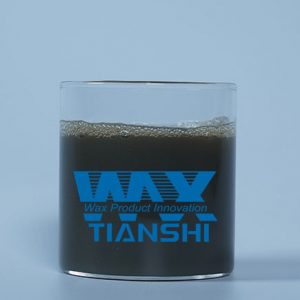
Wax emulsions have become a core component of high-performance water-based coatings as the industry rapidly shifts toward environmentally friendly and low-VOC technologies. Unlike solvent-based wax additives, wax emulsions disperse easily in water, deliver uniform film modification, and provide multiple performance benefits including slip improvement, water resistance, scratch and abrasion protection, anti-blocking, and matting effects. Their compatibility with acrylic, polyurethane, epoxy, and hybrid emulsions makes them an essential tool for formulators aiming to design durable and cost-effective paint systems.
The performance mechanism of wax emulsions is based on controlled particle migration. During film formation, the water evaporates and the wax particles—typically polyethylene, polypropylene, carnauba, or Fischer-Tropsch wax—gradually move toward the coating surface. There, they create a protective layer that reduces friction, enhances hardness, and prevents micro-scratches caused by daily contact. This surface modification is critical for household paints, furniture coatings, industrial finishes, and any system where long-term visual durability is required.
One of the most valuable advantages of wax emulsions is the balance between scratch resistance and gloss retention. Unlike powders or coarse waxes, emulsified wax provides smooth, uniform distribution without roughness or white marks. This allows water-based coatings to achieve a silky touch, improved stain resistance, and enhanced cleaning performance—all while maintaining the desired gloss level.
Wax emulsions also significantly improve water repellency. Their hydrophobic nature reduces water penetration, prevents swelling, and increases the barrier effect of the coating. This is especially useful in exterior paints, wood coatings, leather finishes, and architectural coatings exposed to high humidity or frequent cleaning. By forming a protective micro-layer, the coating becomes more stable and less prone to water-induced defects.
In addition, wax emulsions provide excellent anti-blocking performance. Two coated surfaces are less likely to stick together during manufacturing or storage, making them highly suitable for packaging coatings, furniture coatings, and flexible substrates. The reduced surface friction contributes to better handling, superior abrasion resistance, and improved surface slip.
Another important function is the role of wax emulsions in matting or gloss control. In many water-based coatings, especially furniture and industrial finishes, surface gloss must be precisely controlled. Wax emulsions provide a gentle matting effect that improves touch and appearance without causing haze or unevenness. Their fine particle size allows for predictable gloss adjustment in a wide range of systems.
Formulation flexibility is another strength. Wax emulsions can be introduced during grinding or added at the final stage with minimal impact on viscosity. They remain stable in pH-controlled systems and do not negatively affect storage stability, making them reliable for large-scale production.
As consumer expectations for environmentally friendly coatings continue rising, wax emulsions are becoming irreplaceable in achieving low-VOC, high-performance water-based paints. Their ability to enhance durability while supporting sustainable formulation goals makes them one of the most important coating additives today.
If you need high-quality wax emulsions for water-based coatings, TIANSWAX offers PE, PP, FT, and specialty wax emulsions designed for scratch resistance, slip improvement, and water repellency. Contact us for professional formulation support and customized solutions.
 Leave a message

We’ll get back to you soon