

2026-05-22 Pageview:126
UV coatings are widely utilized across packaging, wood finishing, plastic products, electronics, and various industrial sectors, owing to their rapid curing speeds, high gloss levels, and exceptional production efficiency. However, surfaces cured with UV technology often face challenges regarding scratch resistance, abrasion resistance, and anti-blocking (stacking resistance) properties during handling and subsequent processing.
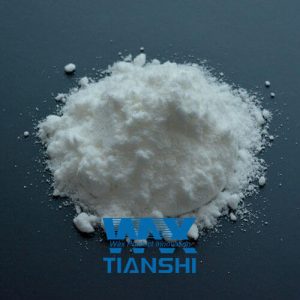
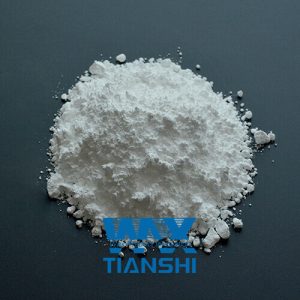
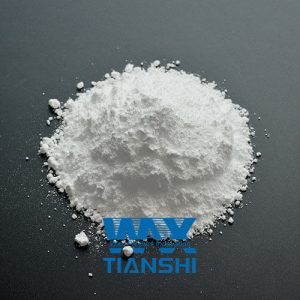
Micronized PTFE wax (polytetrafluoroethylene wax) stands as one of the most effective additives for enhancing the surface performance of UV coatings.
PTFE wax is renowned for its extremely low coefficient of friction and exceptional chemical stability. When properly incorporated into a UV coating formulation, these micronized particles migrate to the surface during the UV curing process, thereby forming a thin, smooth, and protective lubricating layer.
This surface layer significantly reduces friction and substantially enhances the durability of the coating.
One of the core advantages of using PTFE wax in UV coatings is its ability to significantly bolster the coating’s scratch resistance. UV-coated surfaces inevitably encounter mechanical contact during stacking, transportation, and end-use applications; by minimizing surface friction, PTFE wax effectively mitigates surface damage.
Furthermore, the coating’s scuff resistance and abrasion resistance are simultaneously enhanced, ensuring that the coated surface retains its original appearance and gloss over time.
Superior slip properties constitute another key benefit conferred by PTFE wax. Reducing surface friction not only boosts operational efficiency on industrial production lines but also effectively minimizes surface wear caused by friction.
For UV-cured films and sheets that require stacking for storage or are subjected to heavy pressure after curing, anti-blocking (stacking resistance) properties are of paramount importance.
When selecting the appropriate PTFE wax for UV coatings, it is essential to carefully consider factors such as particle size, dispersion uniformity, and compatibility with the UV oligomers and resin matrix. Generally speaking, ultrafine micronized particles not only impart a smoother surface texture and superior optical clarity to coatings but also deliver equally robust protective performance.
The excellent compatibility of PTFE wax with base matrices—such as UV acrylic resins, polyurethane acrylates, and epoxy acrylates—is of paramount importance; it serves as the cornerstone for ensuring the stability of the formulation system and the consistency of its curing performance.
Precise optimization of the additive dosage is the key. If an excessive amount of PTFE wax is added, it may negatively impact the coating’s gloss or curing characteristics; conversely, if the dosage is insufficient, the coating may fail to provide the intended protective effects.
In many advanced UV coating systems, PTFE wax is frequently used in synergy with PE wax (polyethylene wax) or silicone additives to achieve a comprehensive balance and optimization of the coating’s surface properties.
As UV coating technology continues to evolve toward higher performance and greater sophistication, PTFE wax—as a critical additive—will continue to play an indispensable role in enhancing both surface protection and durability.
If you are currently developing UV coating products and are seeking to significantly improve scratch resistance and surface slip properties, our range of micronized PTFE waxes offers a reliable and exceptional high-performance solution. We invite you to contact us at any time to receive expert technical support and guidance on formulation applications.
 Leave a message

We’ll get back to you soon