

2026-06-18 Pageview:187
Lubrication is one of the most critical factors in PVC processing. Whether producing pipes, profiles, sheets, fittings, or cable compounds, manufacturers must carefully balance lubrication to achieve good fusion, stable processing, and superior product quality. This is typically achieved through the use of internal and external lubricants.
While both types of lubricants contribute to improved processing performance, they play different roles in PVC formulations. Understanding their roles is crucial for developing effective lubrication systems.
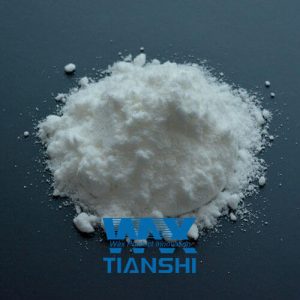
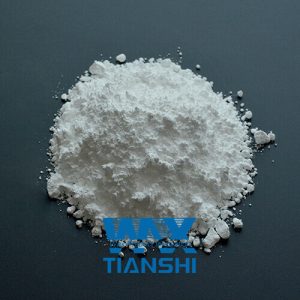
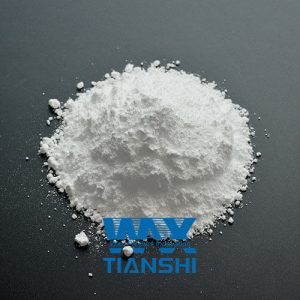
The primary function of internal lubricants is to reduce friction between PVC resin particles during processing. By reducing internal friction, these additives help control fusion and promote the formation of a homogeneous melt. Oxidized PE wax is one of the most commonly used internal lubricants because its polar functional groups have good compatibility with PVC resin.
The main purpose of internal lubricants is to support controlled fusion. Good fusion contributes to improved mechanical properties, dimensional stability, and product consistency. Insufficient internal lubrication can lead to unstable processing and compromised product quality.
External lubricants play a different role than internal lubricants. These external lubricants do not act within the PVC melt, but rather reduce friction between the molten PVC and metal surfaces such as screws, barrels, dies, and calibrators. This helps improve melt flowability and prevents sticking during extrusion.
Common external lubricants include PE wax, paraffin wax, and various specialty waxes. These materials help improve equipment release performance, reduce processing resistance, and do not significantly affect fusion performance.
A well-designed PVC formulation requires a balance between internal and external lubrication. Too much internal lubricant can delay fusion, while too much external lubricant can reduce melt cohesion, affecting product performance. Conversely, insufficient lubrication can lead to processing difficulties and equipment wear.
Oxidized PE wax is often chosen as an internal lubricant because it helps optimize fusion while maintaining good processing stability. When used in conjunction with a suitable external lubricant, it helps improve extrusion efficiency and ensure consistent product quality.
The ideal lubricant ratio depends on a variety of factors, such as the PVC formulation, stabilizer ratio, processing equipment, and product requirements. Manufacturers typically fine-tune their lubrication systems through production trials to achieve optimal results.
Today, the combination of internal and external lubricants remains fundamental to PVC processing technology. Choosing the right lubricant helps improve production efficiency, product quality, and long-term processing stability.
Tiens Wax Industry offers a full range of oxidized PE waxes, PE waxes, and specialty lubricant additives for PVC processing. Please contact our technical team for assistance in optimizing your PVC lubrication system.
 Leave a message

We’ll get back to you soon