

2026-01-06 Pageview:298
Water-based coatings are increasingly adopted across architectural, industrial, wood, packaging, and plastic applications due to environmental regulations and growing demand for low-VOC solutions. However, compared with traditional solvent-based systems, water-based coatings often face challenges in surface protection, including lower scratch resistance, reduced abrasion durability, and insufficient blocking resistance. Wax emulsion has become one of the most effective functional additives for addressing these limitations while maintaining formulation stability and environmental performance.
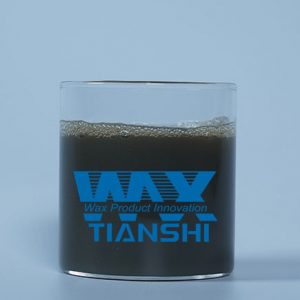
Wax emulsion consists of finely dispersed wax particles in an aqueous medium, allowing easy incorporation into water-based coating systems. Once applied and dried, these wax particles migrate toward the coating surface and form a thin, uniform protective layer. This micro-layer significantly reduces surface friction, which directly improves scratch resistance and scuff resistance. As a result, coated surfaces are better protected against mechanical damage during handling, transportation, and daily use.
Another key contribution of wax emulsion is enhanced abrasion resistance. In floor coatings, industrial finishes, and furniture coatings, repeated contact and wear can quickly degrade the surface. The lubricating effect of wax particles minimizes direct contact between abrasive forces and the polymer matrix, helping maintain surface integrity over time. This not only prolongs the service life of the coating but also preserves visual quality by reducing visible wear marks.
Blocking resistance is also critical in many water-based coating applications, particularly in packaging, wood coatings, and stacked finished products. Without proper surface protection, freshly coated surfaces may stick together under pressure or elevated temperatures. Wax emulsion creates a low-tack surface that prevents adhesion between coated surfaces, improving processing efficiency and reducing product defects during storage and transport.
In addition to mechanical protection, wax emulsion contributes to improved chemical and moisture resistance. By forming a hydrophobic micro-barrier at the surface, it limits the penetration of water, mild chemicals, and contaminants. This property is especially valuable in protective coatings, architectural finishes, and functional industrial coatings exposed to humidity, cleaning agents, or light chemical contact.
Formulation flexibility is another advantage. Wax emulsions are compatible with a wide range of water-based binder systems, including acrylics, polyurethanes, and hybrid polymers. They can be added during the let-down stage or as a post-additive, allowing manufacturers to fine-tune surface properties without negatively affecting gloss, transparency, or color development when properly selected. Different particle sizes and melting points also enable formulators to balance surface protection with desired tactile feel and visual appearance.
From a sustainability standpoint, wax emulsions support the development of high-performance, environmentally compliant coatings. By enhancing surface durability and extending product lifetime, they reduce the need for frequent recoating or replacement, contributing to lower material consumption and overall environmental impact.
In conclusion, wax emulsion plays a critical role in enhancing surface protection in water-based coatings. Through improved scratch resistance, abrasion durability, blocking resistance, and moisture protection, it helps overcome traditional performance gaps of water-based systems. For coating manufacturers seeking to deliver durable, high-quality, and low-VOC products, wax emulsion is a proven and versatile additive solution.
 Leave a message

We’ll get back to you soon